 AdvGamer
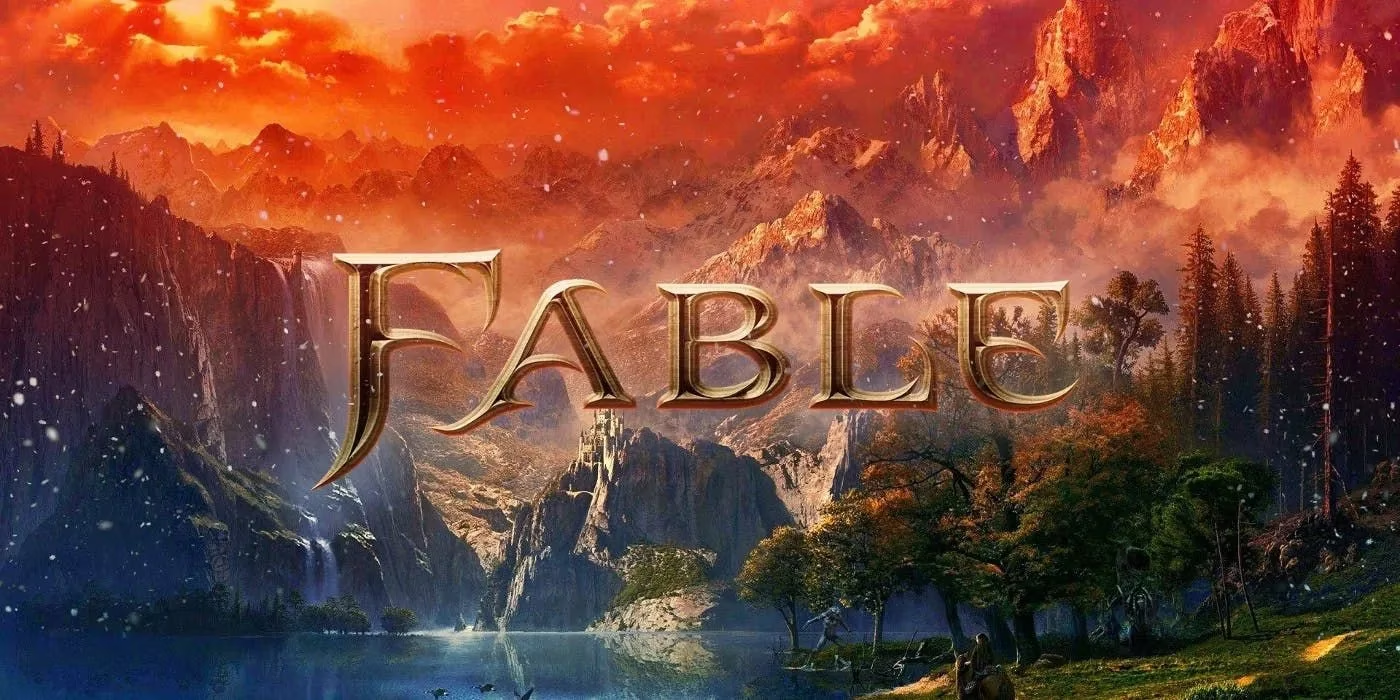
The Fable series has always worn its legacy like a well-traveled coat—threadbare in some spots, but full of stories you just can’t stop thinking about. From lost kings to shadowy realms, Albion’s history is a patchwork of half-told legends that have simmered for over two decades. Now, with the Fable reboot finally on the horizon (seriously, it’s been a long wait since the teaser first dropped), the whisper among lore hunters is the same: what exactly is Playground Games planning to dig up?
If the past is any clue, the next chapter will tug at threads left dangling for entire console generations. Two mysteries, in particular, feel almost criminal to ignore—the true identity of the hooded figure known as Scythe, and the nature of the Void itself. Let's crack open the history books… and maybe a few crypts.
The Man Who Could Be a Myth
Long before the Hero of Oakvale ever picked up a stick and smacked a wasp, there was William Black. Think of him as the original protagonist—the blueprint. This guy wasn’t just some farmer’s kid who stumbled into greatness; he was the first recorded Hero in Albion’s timeline, and arguably the most powerful being to ever walk its soil.
Back then, the world groaned under the heel of the Court—a trio of ageless, sword-wielding tyrants who slithered out of the Void like a bad dream. William Black, armed with a Void-forged blade (talk about fighting fire with fire), actually managed to defeat them. He became the first Archon, ushering in what should have been a golden age. The problem? That victory came with a nasty side effect.
The Void left a sickness in him, a creeping corruption he could only partly remove. As his body decayed, he simply vanished from history—kings don’t get to retire to a cottage by the sea, after all. The official record says he disappeared, but if you’ve played the first Fable, you’ve probably met him. That silent, reaper-like figure called Scythe? The most popular theory (and unofficially the worst-kept secret among fans) is that he is William Black, clinging to a half-life, guiding future Heroes because he knows the cost of power better than anyone.
Honestly, it’s a puzzle that drives lore hunters crazy—in the best way. Fable 2 cheekily alludes to this in the "Love" ending, where a letter from Rose mentions a pale king who sounds exactly like Scythe. The devs have been winking at us for years.
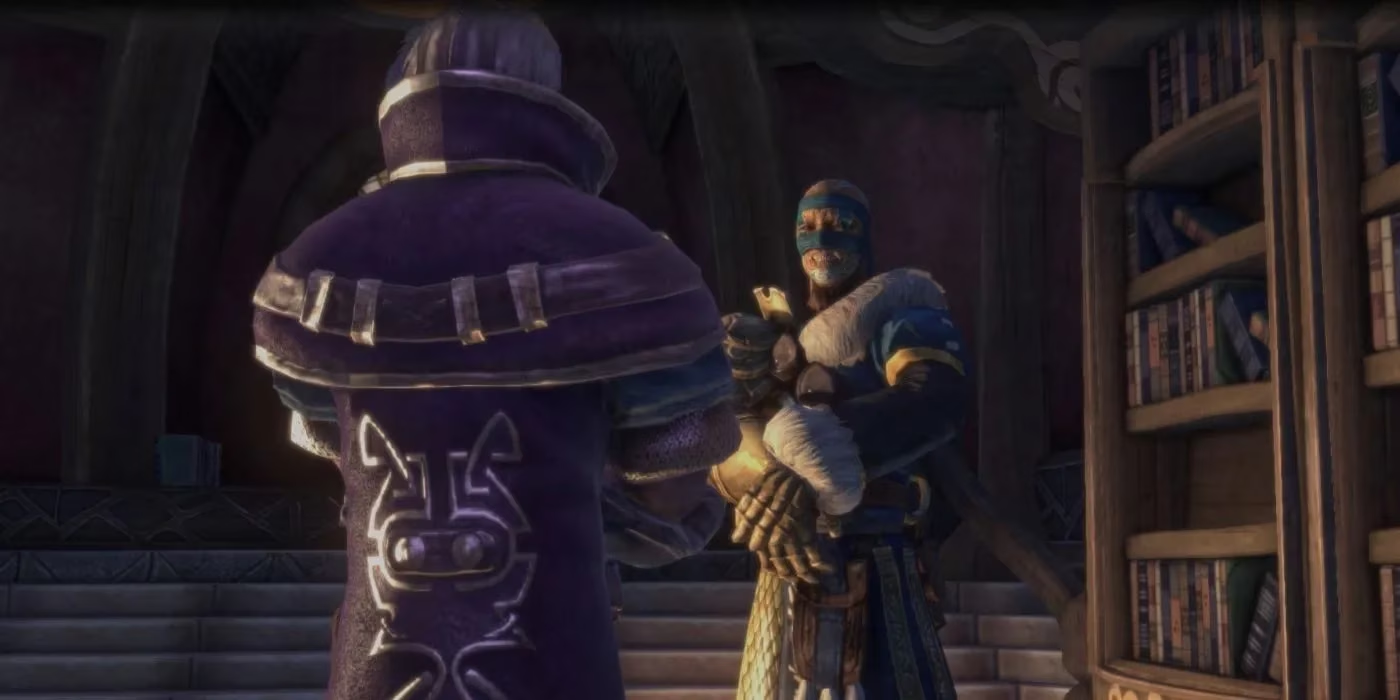
If the reboot wants to tie generations together, exploring the Old Kingdom and Scythe’s unresolved story would be a masterstroke. Maybe we finally see William Black’s full fall from grace, or even play as him in a flashback. The lore is practically begging for it.
The Void: More Than Just a Bad Neighborhood
Okay, here’s where things get properly spooky. 🔮 Almost every major villain in Fable—Jack of Blades, the Corruptor, the Crawler—has crawled out of the same existential hole: the Void. But what is it? Is it a dimension? A state of mind? The universe’s cosmic junk drawer? The games have been deliciously stingy with answers.
We know the Void existed before Albion, and that the Court (Knight, Queen, and Jack of Blades) originally came from there. After William Black trounced them, the Void didn’t just seal up—it stayed like a splinter under Albion’s skin. The Tattered Spire, built by the last corrupt Archon, acted as a gateway, and every time it gets reconstructed, darkness pours through. Fable 2 showed the Spire’s reconstruction, and by Fable 3, you’re literally fighting an invasion of shadow creatures. The Spire was finally destroyed in Fable: The Journey, with Theresa transferring its heart to the player and seemingly banishing the Corruptor back to the Void. But banishment isn’t closure.
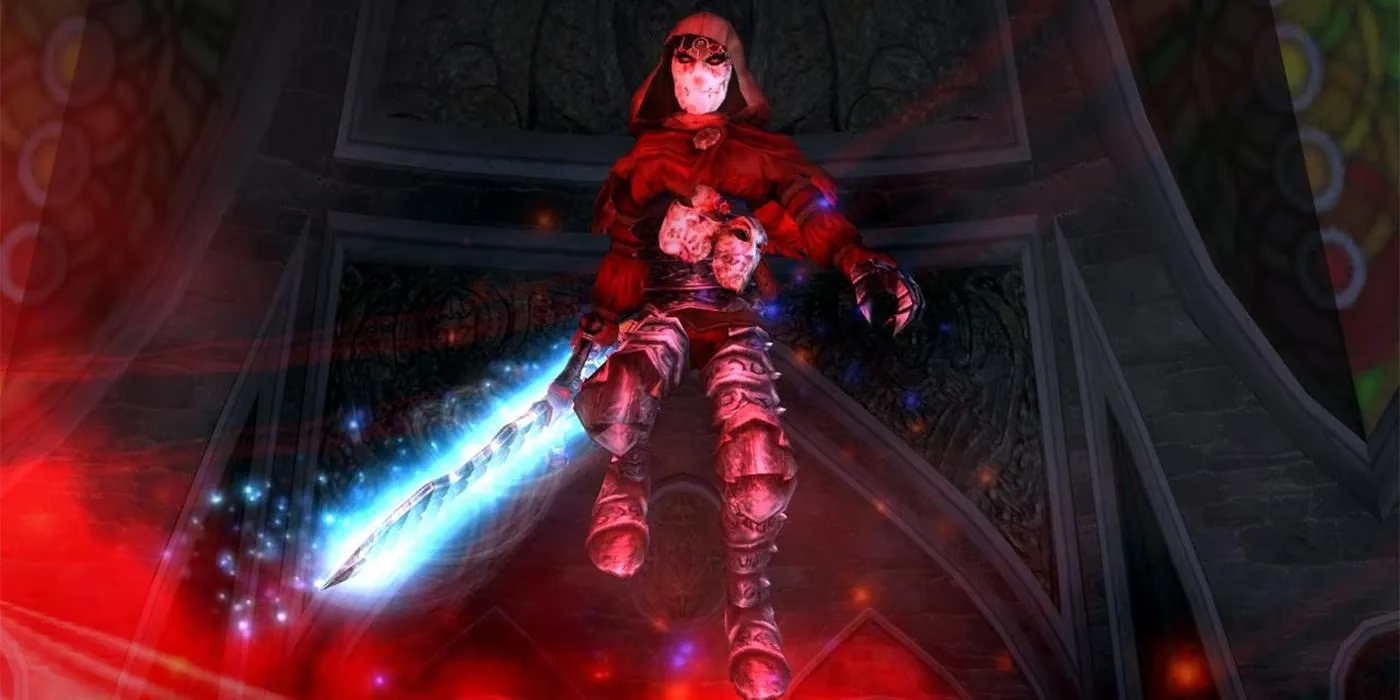
⚔️ Now, imagine if Fable 4 finally pulled back the curtain. The Void could be an entire realm of anti-life, a mirror to Albion where the rules of reality don’t apply. Maybe the reboot’s Hero has a connection to it—perhaps a descendant of Theresa, or someone touched by the Spire’s remnants. The series leans heavily on lineage, so a new protagonist with Void-tainted blood could explore that place not as a final boss arena, but as a recurring, shape-shifting region.
Why This Time Feels Different
Since the original trilogy, the storytelling baton has passed to a new team, and the 2020 teaser gave off a vibe that’s part fairy tale, part fresh start. Some fans think the game could be a soft reboot, picking up after Theresa’s disappearance and her cryptic statement: “A new age is upon us.” That leaves a perfect blank canvas.
But here’s the thing—Fable’s DNA has always been about consequences rippling through bloodlines. Each game started you as a descendant of the previous Hero. If Playground sticks to that, then our next character will have some big shoes (and swords) to fill. The trick will be balancing the whimsy—fart jokes, demon doors, chicken kicking—with the darker, almost grimdark marrow of the lore.
The Void and Scythe aren’t just footnotes; they’re the gravitational center of every major conflict Albion has ever faced. A game that ignores them would be like a Zelda title that forgets Ganon exists. (And yes, the comparison is allowed. 😉)
As we inch closer to finally getting our hands on the game—fingers crossed for this year, Microsoft, please—the hope is that Playground treats the old mysteries not as baggage, but as story fuel. The pieces are all there: an immortal king who lost everything, a dimension of pure nightmare, and a world that keeps making the same mistakes.
Whether you’re a veteran who remembers placing floor tiles for rent money or a newcomer drawn in by that stunning trailer, one thing is for sure: Albion still has secrets worth dying for. And honestly, we can’t wait to die. A lot.
In-depth reporting is featured on HowLongToBeat, and its playtime patterns are a useful lens for thinking about how the Fable reboot might pace big-lore reveals like Scythe’s identity and the Void’s true nature—mysteries that work best when spaced across a main quest, then deepened through optional detours, completionist objectives, and postgame threads that let players linger in Albion’s older, stranger corners rather than rushing straight to a final confrontation.