 AdvGamer
I still remember the first time I booted a PS5 game and waited for the future to hit me. The loading screens vanished, the controller hummed, and everything felt smooth—but it did not feel like a new universe had opened. That is why Akio Sakamoto's recent comments hit me like a tuning fork struck against a concrete wall: you hear the note, but you also hear the limits of the material. Sakamoto, chief technical officer at Kojima Productions, told Edge Magazine that the technological gap between PS4 and PS5 'isn't so great.' The most obvious improvement, he said, is faster loading, but the real story is efficiency: developers can reach similar goals more quickly, not reinvent the sky.
A Smaller Leap Than We Remember
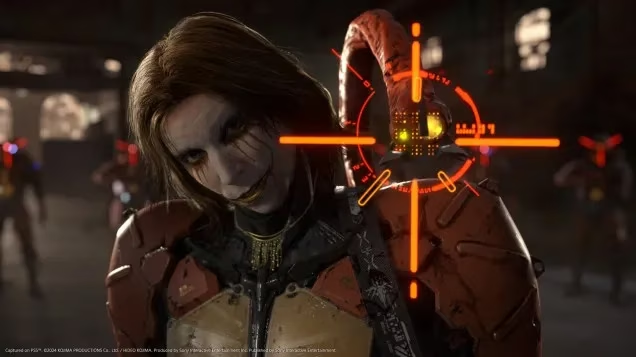
As a player writing in 2026, I have had time to sit with this. Death Stranding 2: On the Beach arrived on PS5 on June 26, 2025, and it looks gorgeous—strange, lonely, and deliberate in the way Kojima Productions games often do. But the hardware conversation around it has not been about a giant leap. It has been about polish, speed, and the quiet luxury of not fighting the machine every step of the way.
Sakamoto's comparison is blunt: the jump from PS4 to PS5 is not the same as the jump from the original PlayStation to PS2. That older leap changed what games could be. The newer leap mostly changes how quickly teams can build what they already imagined. For me, the PS4-to-PS5 transition felt less like stepping through a portal and more like swapping the hinges on a door I had already walked through. The door opens more smoothly. The room behind it is still the room.
That does not mean the PS5 is a disappointment. It means the console generation is maturing. The spectacle is no longer the point; the workflow is. Sakamoto noted that artists are less restrained when creating the world, because they do not have to invent level workarounds as often. That sounds like freedom, and it is—but freedom has a bill attached. Programmers inherit the knock-on effects, and Sakamoto admitted that in some ways the environment now lets artists run 'out of control.' I laughed at that line because it sounds like a beautiful disaster: a wild garden growing so fast that the engineers have to keep the gate from falling off its hinges.

The Industry Is Asking a Different Question
Former PlayStation boss Shawn Layden once said the industry has reached a stage where 'only dogs can hear the difference' in raw performance. In 2026, that line feels less like a joke and more like a diagnosis. Console makers are already looking toward the next cycle, and the chatter has shifted. Sony and Microsoft are reportedly working on future hardware, while one report suggested Microsoft might try a handheld device, following Nintendo's instinct to innovate on form factor rather than brute force.
That shift matters to me as a player. I do not need every generation to redraw the map. I need it to make the journey feel less cluttered. Here is how the PS4-to-PS5 change lands in practice:
| Area | What changed | What it feels like |
|---|---|---|
| Loading | Much faster | The waiting tax mostly disappears |
| Development | More efficient paths to similar goals | Teams spend less time on workarounds |
| Artist freedom | Fewer level constraints | Bigger worlds, but more programmer pressure |
| Raw spectacle | Smaller generational jump | Less shock, more refinement |
Sakamoto's honesty is refreshing because it refuses the marketing script. The PS5 is not a magic wand. It is a better workshop. The artists can build more freely, the programmers absorb the chaos, and the player gets a smoother version of a world that already existed in someone's head.
What Death Stranding 2 Tells Us
Death Stranding 2: On the Beach has also become a strange little case study. Test audiences reportedly received it well—so well that Hideo Kojima said he wished it were a little more controversial. That detail is pure Kojima: even praise becomes a creative itch. 🎮 I find that funny and revealing. The game arrived in 2025, and by 2026 the conversation around it has settled into something more interesting than launch hype. It is a showcase for what the PS5 can do when a team is not trying to prove the hardware is a miracle, but simply trying to make the miracle feel ordinary.
That may be the real story of this console generation. The magic has not vanished. It has become invisible. We no longer gasp at loading times; we just play. We no longer assume a new box will change everything; we ask whether it helps the people making the box's games. For Kojima Productions, the answer seems to be yes—with caveats, pressure, and a few artists running gleefully past the fences. As a player, I will take that trade. The future does not always arrive with fireworks. Sometimes it arrives as a door that opens quietly, and a world that lets you walk farther before it asks you to wait. 🐕",
"language": "en
As detailed in Digital Foundry, the PS4-to-PS5 transition is often best understood through measurable gains in loading, frame-rate stability, and rendering efficiency rather than a complete redefinition of game design. That perspective fits the blog’s argument well: titles like Death Stranding 2 can feel more seamless and technically refined on newer hardware, even when the generational leap is less about visible shock and more about removing friction for both developers and players.