 AdvGamer
In 2026, the Star Wars gaming landscape continues to evolve, but few titles manage to anchor themselves as deeply and meaningfully within the franchise's most cherished cinematic era as Massive Entertainment's Star Wars Outlaws. While recent years have seen developers flock to the narrative-rich period between the prequel and original trilogies, Outlaws boldly plants its flag directly in the timeline of the classic films, a decision that comes with immense expectation and the weight of legacy. This isn't just another game tossing in a few superficial callbacks; it's a title that, against all odds, has managed to weave its original story into the fabric of the original trilogy with a level of intimacy and thoughtfulness that feels nothing short of miraculous. By pulling up a chair, so to speak, between The Empire Strikes Back and Return of the Jedi, the game grants itself the unique opportunity to explore iconic locations not as sterile museums, but as living, breathing parts of a galaxy still reeling from the Empire's tyranny.
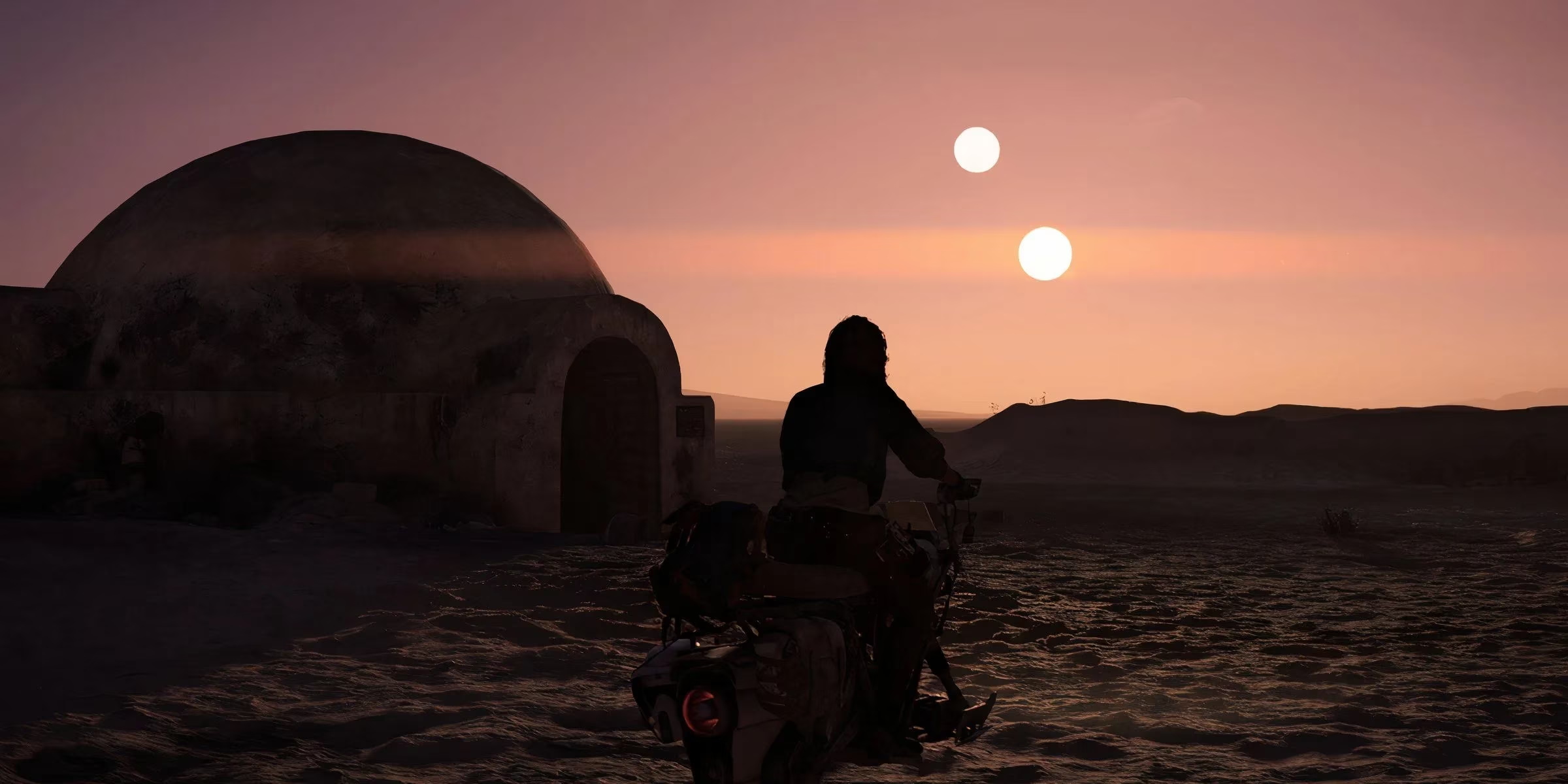
The Heart of the Galaxy: Tatooine's Poignant Transformation
Let's cut to the chase: Tatooine is the crown jewel of Star Wars Outlaws' nostalgic playground. As the most frequently visited planet in Star Wars lore, its inclusion was a no-brainer, but Massive's execution is where the magic happens. The game's adaptation doesn't shy away from the planet's iconic imagery; it embraces it as a narrative necessity. Players can witness Han Solo already frozen in carbonite on display at Jabba's palace—a chilling confirmation of the timeline. Mos Eisley and its surroundings are under considerable Imperial occupation, selling the oppressive atmosphere of the era. But the real masterstroke is the treatment of a much quieter location: the Lars Homestead.
This isn't a cleaned-up, nostalgia-bait tourist attraction. Instead, protagonist Kay Vess and her companion Nix arrive to find the moisture farm reduced to rubble and ashes. Through dialogue with local NPCs, the game adds a profound layer to the lore. These characters, who never knew Luke, Owen, or Beru, speculate about the tragedy that occurred there. This perspective is a game-changer. It transforms a famous location from a piece of fan service into a solemn, galaxy-wide reminder of loss and Imperial cruelty. Massive correctly chose not to downplay the horror of Luke finding his aunt and uncle's smoldering corpses; instead, they weaponized that memory to enhance the game's thematic resonance about cost and consequence. Talk about hitting the nail on the head!
More Than a Footnote: A Galaxy of Coherent Fan Service
The Lars Homestead is just the tip of the iceberg. Tatooine in Star Wars Outlaws is peppered with references that feel coherent, earned, and integrated into the living world. Every other explorable planet in the game may boast more original content, but Tatooine's iconography is handled with such care that it never feels like cheap fan service.
Iconic Locations & Encounters:
-
Jabba's Palace & The Rancor: A direct, thrilling treat for fans of Return of the Jedi. Exploring the palace and knowing what lurks below is a constant, delicious tension.
-
The Dead Sarlacc: Found nestled in the dunes, this visual ties the planet's history together, hinting at the passage of time and past conflicts.
-
The Krayt Dragon: One of the game's most heart-stopping, pants-wetting moments. Suddenly encountering a gigantic Krayt Dragon that erupts from the sand to loom over Kay is a pure, terrifying embodiment of Tatooine's dangers. It's a reference that becomes a core, unforgettable gameplay experience.
Why It Works: Intimacy Over Superficiality
The secret sauce of Star Wars Outlaws' success with its original trilogy setting isn't the quantity of references, but the quality. Other studios might have fumbled these moments or made them superficial checklist items. Massive, however, approached them with a developer's eye for narrative integration. The references serve the story and the world-building, not the other way around. By setting the game in a very specific, tense moment in galactic history, every iconic element must bear the weight of that timeline's logic. Han is in carbonite because the story happens after Empire Strikes Back. The Lars Homestead is a ruin because the story happens after A New Hope. This rigidity forces creativity, leading to those insightful, lore-expanding moments like the locals discussing the homestead's fate.
In an era where legacy IP can often feel mined for cheap nostalgia, Star Wars Outlaws stands out as a title that respects its source material enough to build upon it thoughtfully. It doesn't just show players the galaxy they love; it makes them feel its history, its tragedies, and its ongoing struggles through the eyes of a new character living through it. That's how you stick the landing with a beloved universe. The game proves that with the right touch, even the most familiar sandbox can feel brand new and deeply immersive.