 AdvGamer
Alright, let's talk about the elephant in the room, or should I say, the talking puppet on the beach? It's 2026, and I'm still here, a humble gamer, trying to piece together the glorious, baffling puzzle that is Death Stranding 2: On the Beach. The game is finally in our hands, and let me tell you, the reality is even weirder than the trailers promised. Remember all that speculation about the photo mode? Oh, we were just scratching the surface. Hideo Kojima, that magnificent madman, didn't just give us a way to take pretty pictures of ruined landscapes and Norman Reedus's glorious hair. He turned it into the narrative's beating heart, a mechanic so integral it makes you wonder how we ever played games without it.
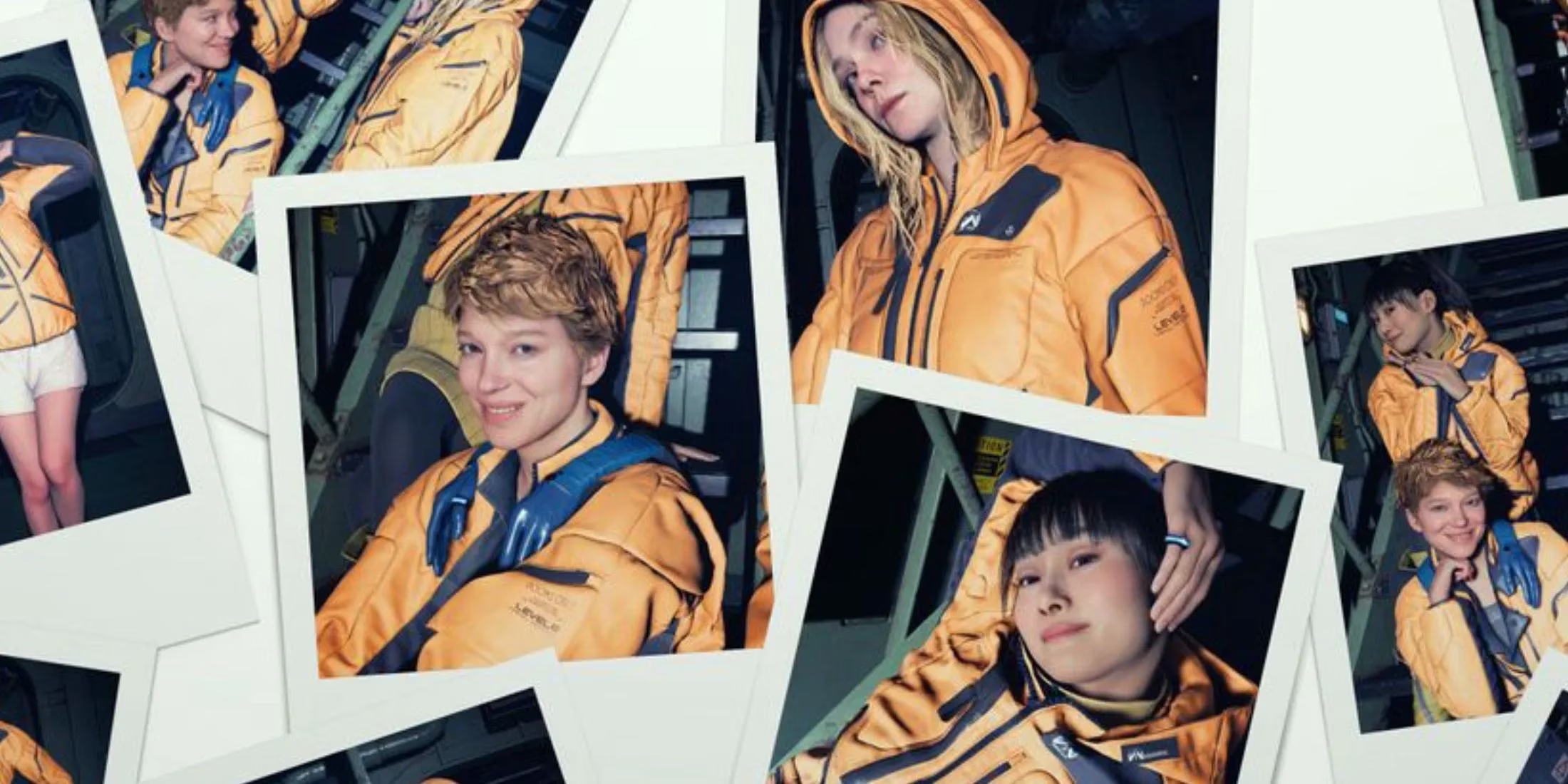
In the first game, Sam was a grumpy deliveryman allergic to human contact. My job was to connect a broken America, one awkwardly balanced package at a time. Fast forward to now, and Sam's got friends! Actual, living (mostly) people he doesn't flinch away from. And what do friends do in 2026? They take pictures, obviously. The photo mode in Death Stranding 2 is this brilliant, tangible proof of Sam's character growth. It's not just a menu option; it's a reflex, a way of interacting with the world Kojima built. The first game was about building bridges and roads. This one? It's about building a photo album, and it's surprisingly profound.
So, how does this thing actually work? Buckle up, because Kojima being Kojima, it's never just a simple 'press X to capture.'
The Camera is Your New Best Friend (and Weapon)
The photo mode is woven into the fabric of the game in ways that constantly surprise me. Here’s a quick breakdown of its utterly bizarre uses:
-
Mid-Boss Selfies: Yep. You read that right. Facing down a gargantuan BT or a frenzied MULE? The game will sometimes throw a cheeky prompt: "Capture the moment?" Taking a smug selfie with a monstrous enemy in the background doesn't just give you a cool picture; it can momentarily confuse the enemy or even provide a temporary stat buff labeled "Ego Boost." It's the most Kojima thing imaginable.
-
Dialogue & Memory Triggers: Talking to Fragile or the enigmatic Drawbridge (the group Sam works with now) will often lead to organic photo ops. A character might say, "This view... it reminds me of before the Stranding." Click. That photo then gets saved to a special "Fragile's Memories" album, slowly piecing together her past. It's storytelling through a viewfinder.
-
The Social Strand System: This is where it gets genius. Remember leaving ladders and bridges for other players? Now, you leave Polaroids. You can stick your in-game photos onto signs, structures, or even random rocks. Other players traversing the same cursed landscape will find them. I've found everything from helpful pictures pointing out hidden cargo to utterly confusing abstract art next to a precipice. One player just left a photo of Higgs's puppet winking. I still don't know what it means, and I love it.
More Than Just a Gimmick: The Emotional Core
This is where the magic happens. The photo mode forces you to stop. In a game about constant traversal and danger, it makes you pause, frame a shot, and appreciate the horrifying beauty of the world. You're not just Sam Porter Bridges, porter; you're Sam Porter Bridges, documentarian of the apocalypse.
It creates these unscripted, personal stories. I have a photo of Lou (the BB from the first game, now grown into a cool teen companion) trying to give a Cryptobiote to a shy, half-transparent BT. I didn't have to take that picture. The game didn't prompt me. But the moment felt so uniquely Death Stranding—equal parts creepy, melancholic, and oddly sweet—that I had to save it. That photo means more to me than any scripted cutscene.
The realism is staggering. The Polaroid filter, the way the photo physically prints out and shakes in Sam's hand, the slight delay as it develops in your inventory... it feels weighty and important. It makes every snapshot feel like a recovered artifact, a tiny piece of history you're preserving.
A Legacy of Weirdness, Perfected
Let's be real: we all expected weird. A talking puppet controlled by a severed hand? High-profile cameos that make no logical sense? Standard Tuesday for Kojima Productions. But embedding the photo mode so deeply into the gameplay and theme of connection is a masterstroke. It takes the "Social Strand System" and makes it personal, emotional, and human.
Is it essential for gameplay? Not always. You could probably beat the game without taking a single picture. But you'd be missing the point entirely. You'd be missing Sam's journey from a man who shuns connection to a man who actively curates memories of it. In a world literally torn apart by death and invisible ghosts, these photos become anchors, proof that beauty and camaraderie still exist.
So, if you're diving into the beaches and canyons of Death Stranding 2, don't just deliver packages. Deliver memories. Take the stupid selfie with the giant BT. Capture the silent moment between two weary travelers. Leave a goofy picture for a stranger to find. In true Kojima fashion, the most powerful tool in this post-apocalyptic world isn't a new weapon or a faster exoskeleton. It's a camera. And I, for one, am fully invested in this bizarre, beautiful photography sim masquerading as a cosmic horror delivery game. Keep on snapping! 📸