 AdvGamer
Death Stranding 2: On the Beach is no longer a far-off promise. The game launched on June 26, 2025, and in 2026 its post-launch conversation still includes one of the strangest pre-release flashpoints: the guest appearance of Hololive VTuber Usada Pekora. Kojima Productions announced that Pekora would appear as a hologram in the sequel, a cheerful rabbit-eared avatar greeting protagonist Sam and thanking him for his hard work. The reveal drew attention far beyond the usual crossover chatter, because a vocal slice of the Japanese Death Stranding fandom on X reacted with something closer to allergy than applause. Some users declared they would no longer buy the game; others accused the studio of pandering to VTubers.
Pekora is a Hololive VTuber whose carrot-loving avatar is an anime girl with rabbit ears. Alongside singing, she frequently streams games and has recently played Elden Ring: Nightreign. Her persona leans on a hungry, mischievous rabbit-girl image, and she often adds the made-up word “peko” to her sentences, a verbal tic that likely stems from the casual Japanese expression “pekopeko,” meaning “very hungry.” In the Death Stranding 2 hologram, she calls out greetings to Sam and thanks him for his efforts, saying “otsu peko deshita” in place of the standard Japanese phrase “otsukaresama deshita.”
The backlash was immediate and blunt. “I won’t buy Death Stranding 2 now,” one commenter wrote. Another said, “Death Stranding 2 is done for. When a game I planned to buy gets treated like this, I definitely won’t buy it.” A third added, “Stop pandering to VTubers. I won’t buy it now.” The objections appeared to cluster around two concerns: that Pekora’s affected speech and VTuber persona are irritating, or that she clashes with Death Stranding’s more serious, rain-soaked tone. Defenders replied with equal brevity: “Then don’t buy it then!” and “If you are not going to buy DS2 just because Pekora is in it, then don’t!” The cameo landed in the fandom like a carrot-shaped splinter under a thumbnail: small, specific, and impossible for some to ignore.
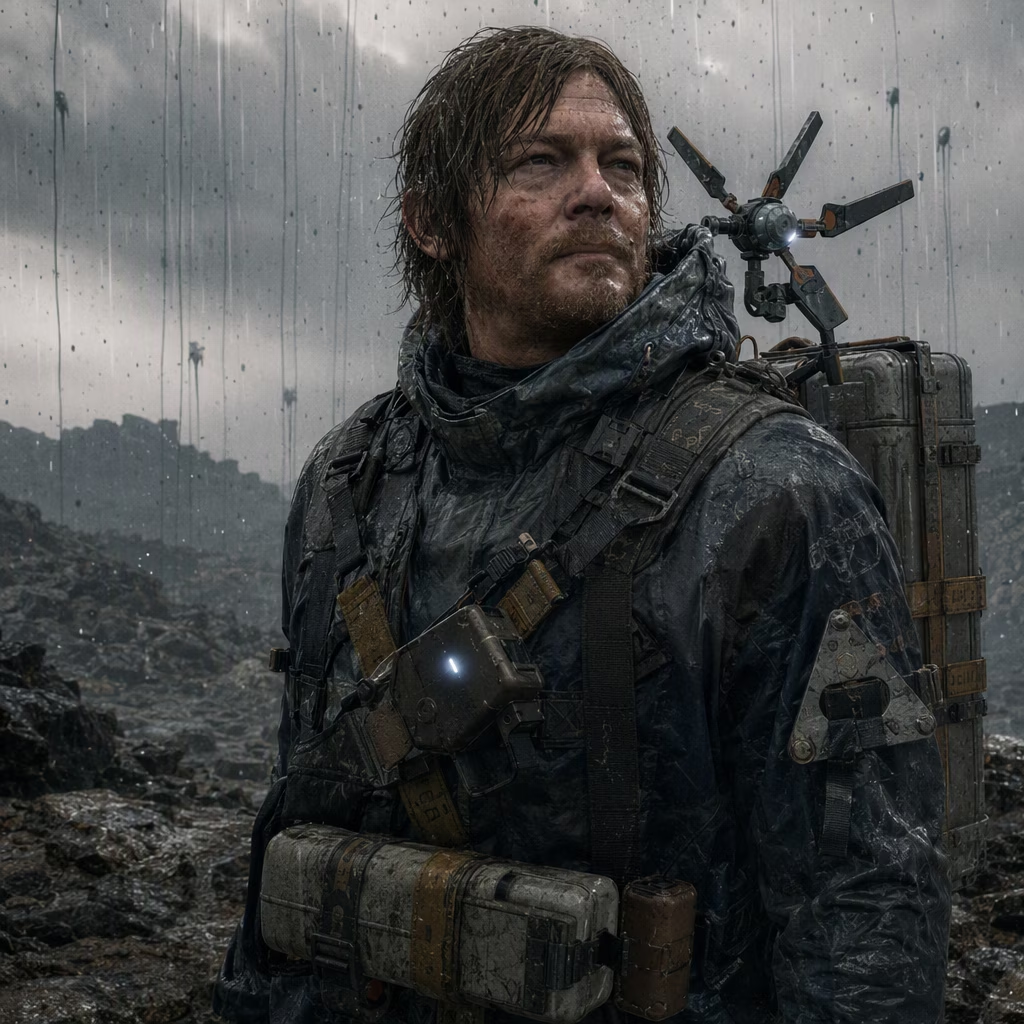
For longtime Kojima watchers, the surprise is less the crossover itself than the intensity of the reaction. Hideo Kojima’s games have long been populated by unexpected crossovers, Easter eggs, and deliberately bizarre elements. Metal Gear Solid 2 featured creepy developer “ghosts”; Metal Gear Solid 3 introduced the Kerotan frog character and included the real-life Japanese snack Calorie Mate in a 1960s jungle setting; Snake Vs. Monkey brought Ape Escape monkeys into the Metal Gear universe. Even the first Death Stranding included Horizon: Zero Dawn-themed holograms, while the PC version added crossover references to Half-Life, Portal, and Cyberpunk 2077 in the form of items. For Kojima, crossovers are not cracks in the facade but load-bearing beams in his playful architecture. Pekora is therefore less an anomaly than another odd souvenir placed on an already crowded shelf.
Because Death Stranding 2 is now available, the boycott talk has become less a purchasing decision than a marker of cultural friction. Earlier reporting on the game’s ESRB rating suggested players would be able to use an unconventional melee weapon, and the broader Kojima ecosystem remains busy. Kojima is also working on a live-action Death Stranding film with A24, a Death Stranding anime is in the works, and he is developing the PlayStation-exclusive action espionage project Physint. He has also described the upcoming Xbox-published OD as “a game I have always wanted to make.” These projects reinforce the sense that Kojima Productions is operating across games, film, and anime with the same magpie-like appetite for strange collaborations.
In 2026, the Pekora episode reads as a rabbit-shaped Rorschach blot for the Death Stranding audience. For some fans, it is proof that Kojima’s crossover instincts have finally collided with a tone they want protected. For others, it is exactly the kind of weird garnish that makes his games worth dissecting. The dispute says less about a single hologram than about the porous border between auteur-driven games and the influencer culture that now surrounds them. Kojima has built a career on treating that border as a playground rather than a wall, and the Pekora cameo suggests he has no intention of sanding down his stranger impulses.