 AdvGamer
Let me tell you, as someone who's spent more time at the Sabacc table than on the Kessel Run, there's an unspoken truth in the galaxy of gaming: a truly great open-world experience needs a mini-game that can steal your soul. Think about it—Gwent in The Witcher 3, Machine Strike in Horizon Forbidden West. They become worlds within worlds. Now, in 2026, Star Wars Outlaws has thrown its hat into the ring with Kessel Sabacc, a card game so deceptively deep and interconnected that it can easily turn your quest to become the galaxy's greatest scoundrel into a quest to become its greatest card shark. I've lost track of the hours and credits I've poured into it. While you can technically ignore it for a good chunk of your adventure, the story will eventually force you to sit down and play, so you might as well learn to play well. Consider this your guide from one scoundrel to another.
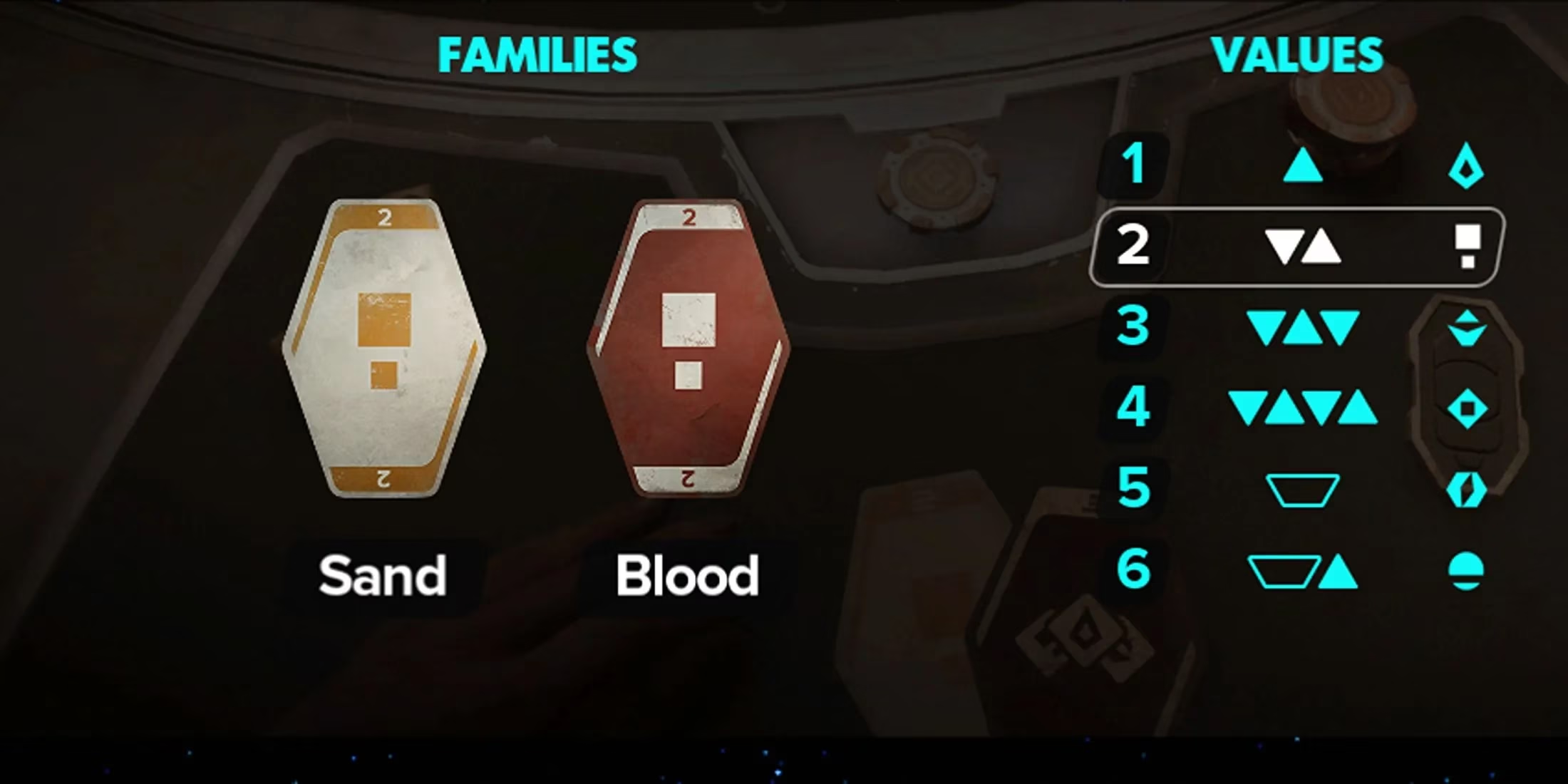
First, let's break down the deck. Kessel Sabacc is built on two distinct families, or suits: Sand (yellow) and Blood (red). It’s a bit like trying to balance the light and dark sides of the Force in your hand—you always need one of each. Each family has cards numbered 1 through 6, with three copies of each number. So, across the whole deck, there are six cards for each number value. The value is shown clearly by the symbol in the center of the card. The game supports up to four players, and you'll be facing off against them, with a dealer droid running the show. Everyone starts with two cards: one yellow and one red. The dealer also flips one card from each deck to start two discard piles. This is where the strategy begins.
Your lifeblood in this game is Stock—those golden chips you use to take actions. To get a new card, you spend 1 Stock to draw from either the main deck or a discard pile. But here’s the catch, and it’s as crucial as a hyperdrive motivator: you must always discard a card from the same family you drew from. So, if you pick a yellow card, you must put a yellow card back. It can be the new card you just drew or the old one you were holding. Remember, the golden rule is you must always have one yellow and one red card in your hand. No exceptions.
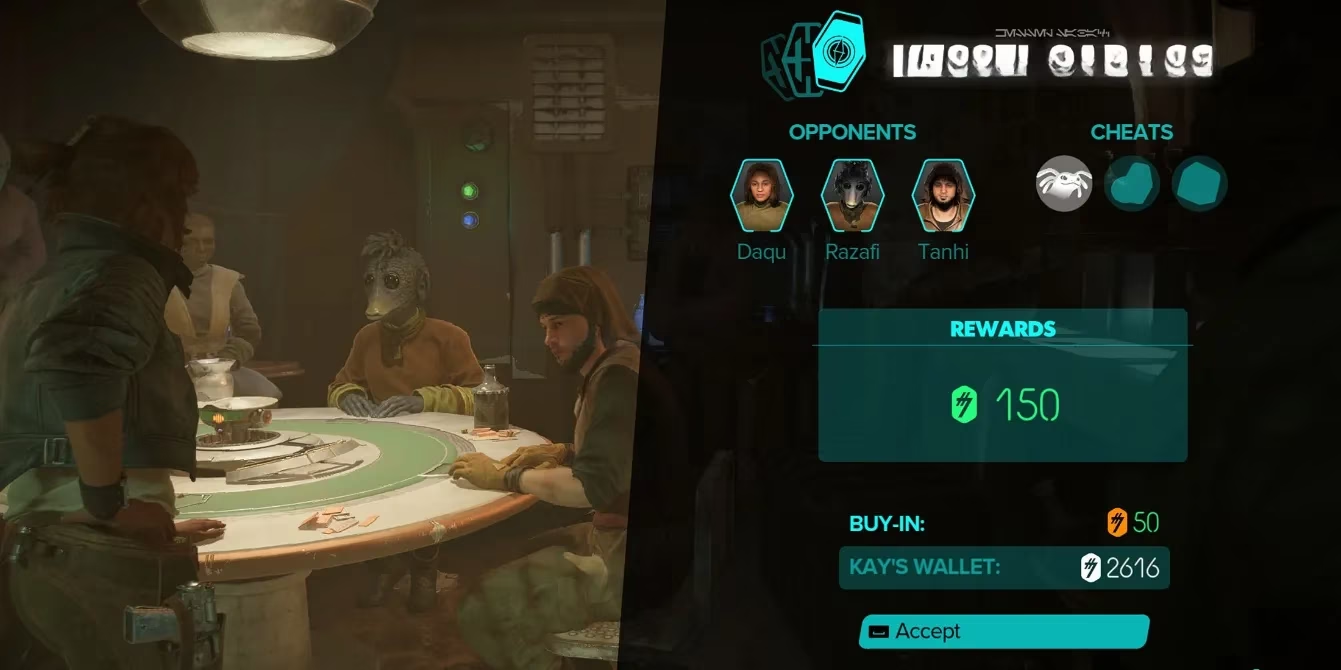
The goal is simple on the surface: form a Sabacc Hand, which is a pair of cards. Since you're rarely dealt a pair, you'll use your Stock over three turns per round to try and make one. The game is a battle of attrition, continuing round after round until only one player has any Stock left. There's no prize for second place; the last player standing wins the entire pot, which is displayed when you sit down. It’s a winner-takes-all system, as ruthless as a Hutt's negotiation.
Now, not all pairs are equal. This is where it gets interesting. In Kessel Sabacc, lower is better. A pair of 1s will beat a pair of 2s, and so on. The official ranking is:
-
A Pair of Sylop Cards (The ultimate hand)
-
A Pair of 1s
-
A Pair of 2s
-
A Pair of 3s
-
A Pair of 4s
-
A Pair of 5s
-
A Pair of 6s
But what if you don't have a pair? Don't panic! You can still win a round if nobody has a pair. In that case, hands are judged by the difference between the two card values. The smaller the difference, the better. For example, a hand with a 5 and a 6 (difference of 1) beats a hand with a 1 and a 3 (difference of 2). However, any Sabacc pair, even a lowly pair of 6s, will beat any non-pair hand. It’s a hierarchy as strict as the Imperial chain of command.
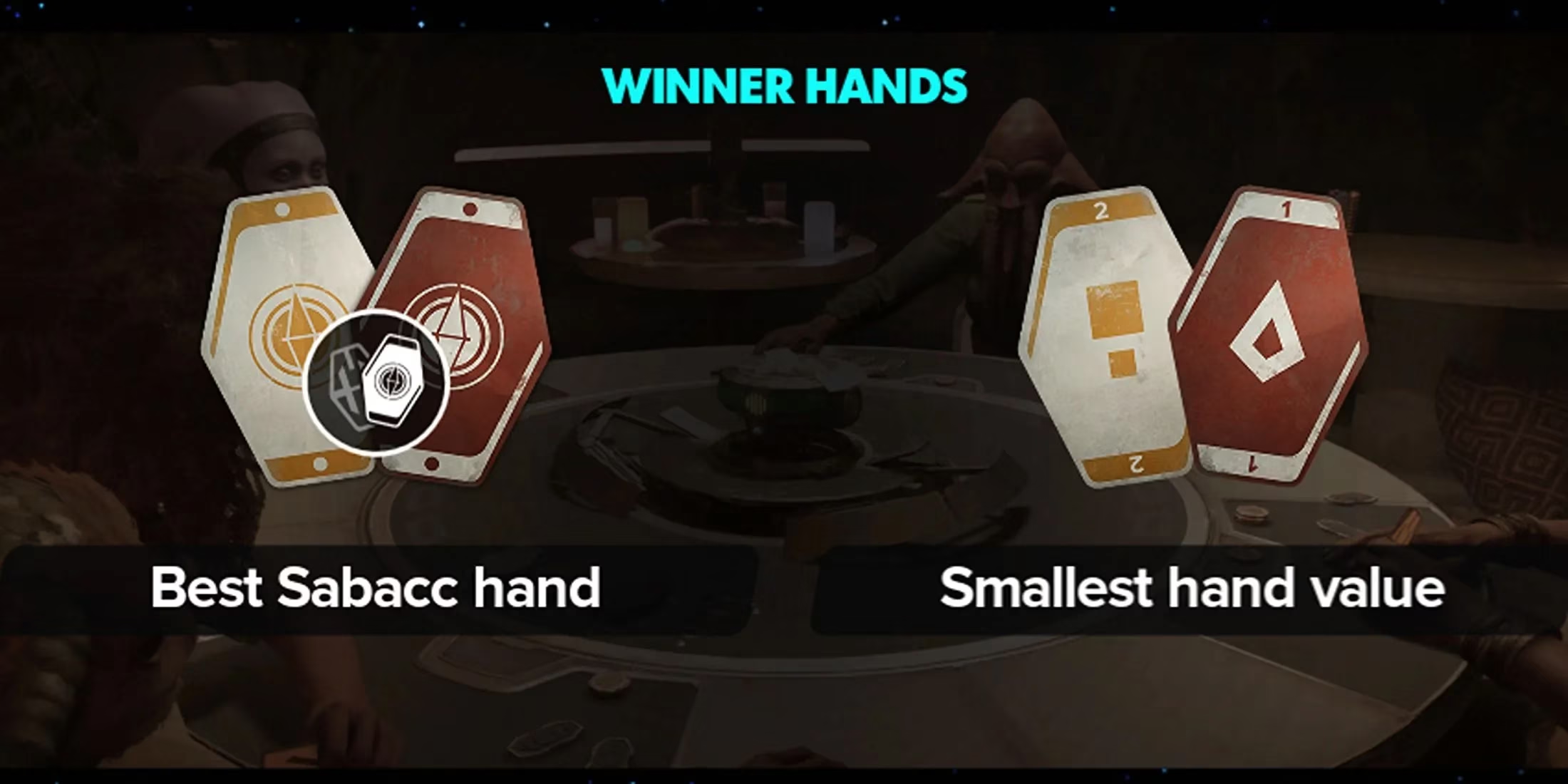
Let's talk about the special cards, the wild cards that can turn the tide faster than a lucky shot from a blaster.
-
Sylop Cards: There's only one of these in each family. They are the chameleons of the deck. A Sylop card automatically copies the value of the other card in your hand. So, a Sylop and a 3 acts as a pair of 3s. If you somehow manage to get two Sylop cards, you have the unbeatable Sylop Sabacc—the holy grail of the game.
-
Imposter Cards: There are three of these in each family. They're a gamble. If you end a round with an Imposter in your hand, you roll two dice and can choose either result to be the card's value for that round. It’s like trusting a protocol droid with tactical advice—sometimes it works out!
On your turn, you usually have two choices:
-
Draw: Spend 1 Stock to take a card from a deck or pile (and discard accordingly).
-
Stand: Keep your current cards, spend no Stock, and pass. You cannot fold like in poker. Sometimes, standing to conserve your resources for the next round is the smartest move, like choosing to hide in the shadows during a firefight.

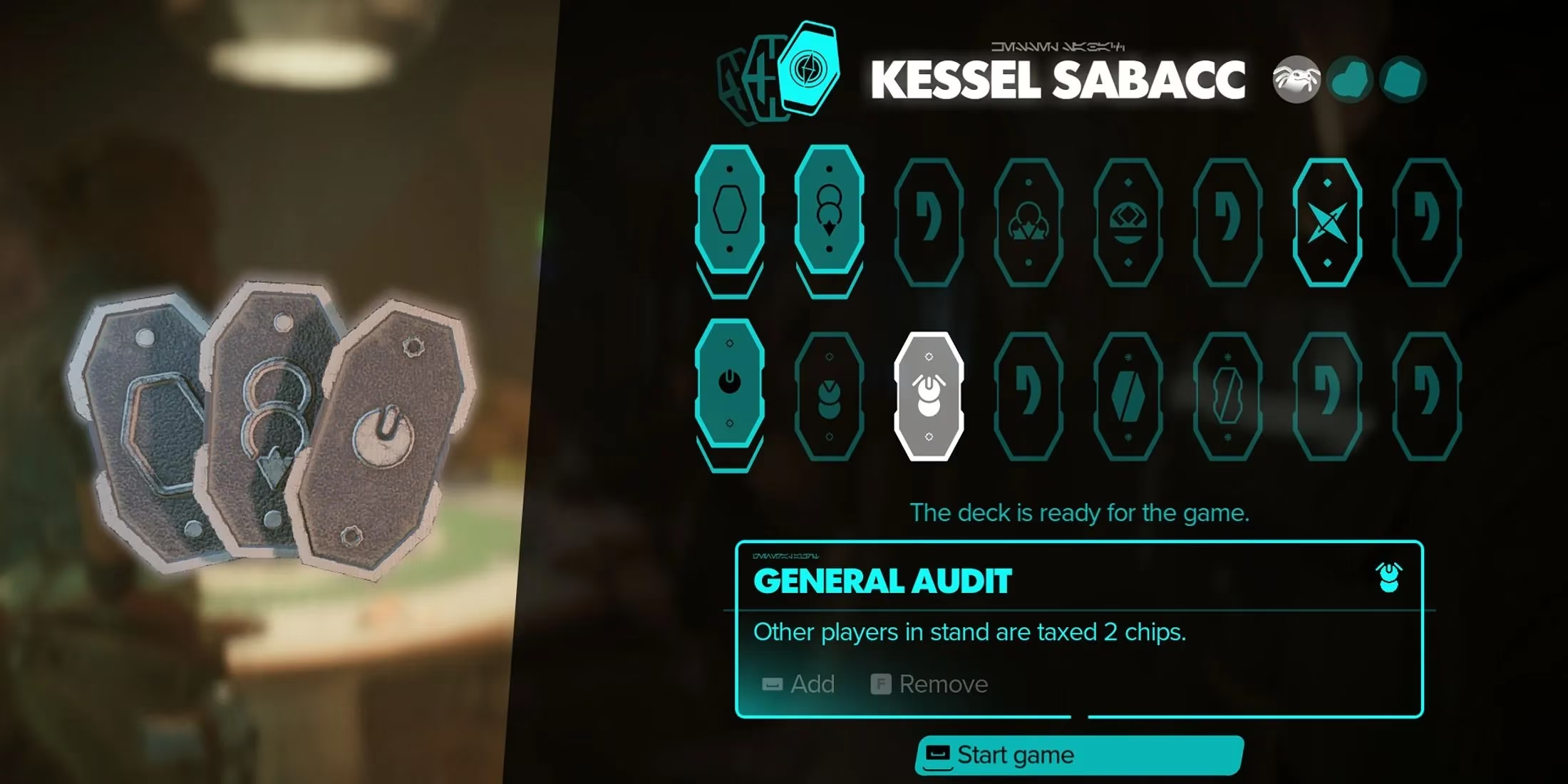
This is where your preparation pays off. Shift Tokens are powerful, single-use modifiers you bring to the table. Before a match, you select three to have available. They can do things like refund spent Stock or swap cards, and they don't cost Stock to play. You find them by winning games, buying them on the Black Market, or exploring. Managing these is key; blowing them all in the first round is like using a thermal detonator to open a locked door—overkill and wasteful.
After three turns, everyone reveals. Players with no Stock are eliminated. Stock for the next round is adjusted based on your performance:
-
Round Winner: Gets all invested Stock back.
-
Loser with a Sabacc Hand: Pays a 1 Stock tax.
-
Loser without a Pair: Pays a tax equal to the difference between their two cards.
This "taxation" system is why minimizing the difference in a losing hand is a critical strategy. The game, a delicate ecosystem of risk and bluff, continues until one player remains.
Now, for the fun part: cheating. You're an outlaw, so play like one! Your first trick is using your companion, Nix, to peek at an opponent's cards at the start of your turn. It’s as subtle as a shadow in a Coruscant alley. But be warned—get caught, and you'll be banned from that table for a while. As you progress, you'll unlock more underhanded abilities. If the quick-time events for cheating bother you, you can even auto-complete them in the settings.
My Top Tips for Dominating the Table 🃏
-
Embrace the Dark Side (Sometimes): Use cheats when you can. Information is power.
-
Simplify Your View: In the settings, under Gameplay > Minigames, change the card headers to Simple Numerals. It makes evaluating your hand as easy as reading a nav-computer.
-
Manage Your Losses: If defeat seems certain, try to minimize the difference between your cards to reduce the tax hit. It’s the financial equivalent of retreating in good order.
-
Imposters Are Your Friend: In a tight spot, an Imposter card gives you a 33% chance to roll the exact value you need. Don't underestimate them.
-
Token Economy: Collect Shift Tokens relentlessly. Check your Collectibles tab to see which ones you've discovered but not yet acquired. Use them strategically, not all at once.
-
Watch the Discards: The discard piles are a public resource. Use them! They can be the missing piece for your pair, sitting there like a spare power coupling.
-
Review the Rules: Confused? The complete rules are always in your Databank under Tutorials > Kessel Sabacc. No shame in studying.
Mastering Kessel Sabacc is more than just a side activity; it's a test of nerve, strategy, and a little bit of larceny. It’s a game within a game that perfectly captures the spirit of the Star Wars underworld. Now get out there, sit at the table, and may the cards be ever in your favor.