 AdvGamer
When Star Wars Outlaws arrived in 2024, many gamers braced themselves for the familiar Ubisoft open-world formula: a sprawling map littered with icons, a checklist of tasks, and a rhythm that felt more like work than play. For years, titles from Assassin’s Creed to Far Cry had followed this blueprint, building massive playgrounds that often sacrificed surprise for sheer volume. Yet the scoundrel adventure starring Kay Vess did something unexpected. It tore up that well-worn template and replaced it with an experience that felt genuinely free, where the galaxy responded to curiosity rather than commanding it. Two years later, the game still stands as a blueprint for how open-world design can evolve.
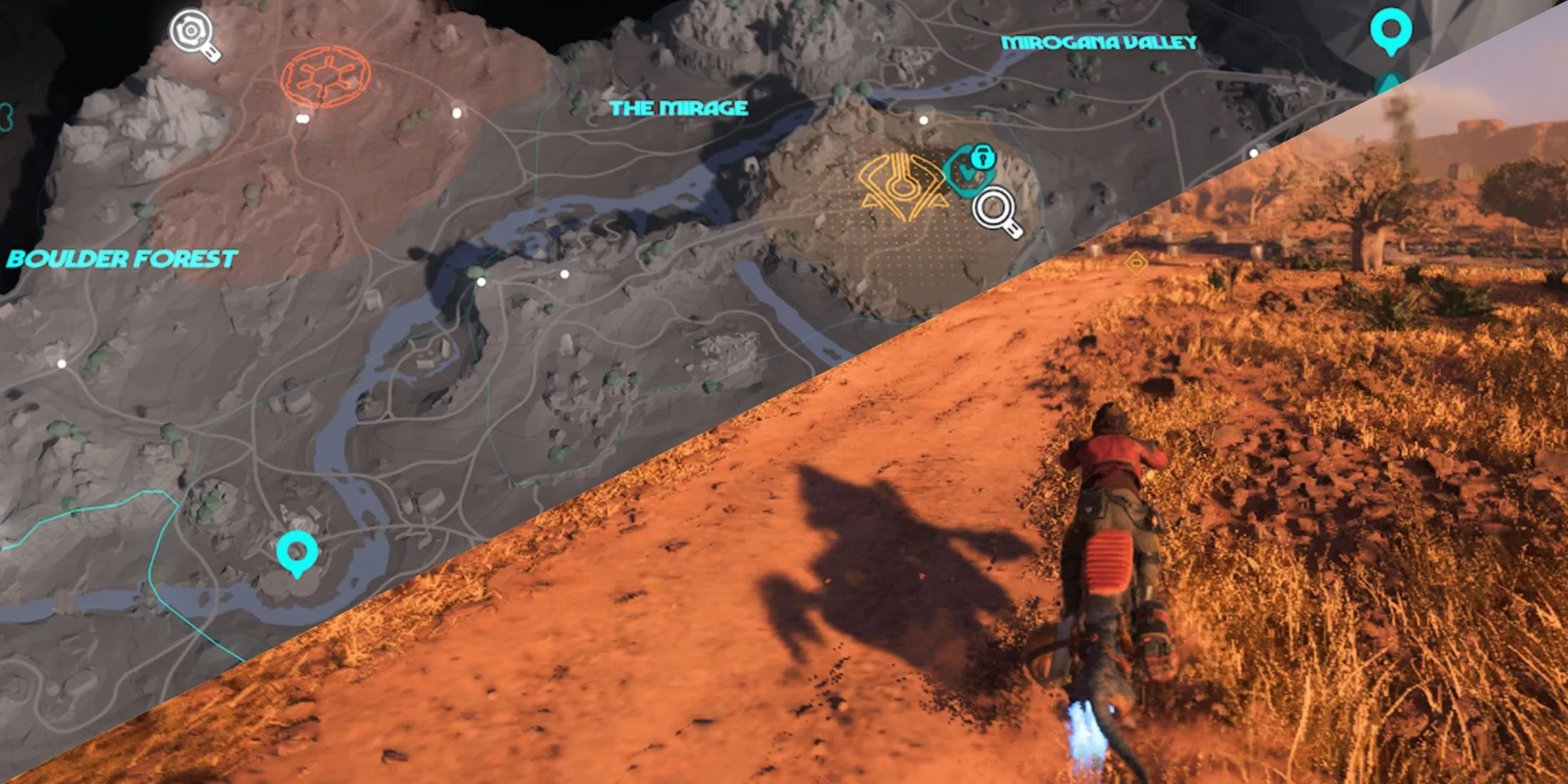
A Clean Slate: The Minimap Revolution 🗺️
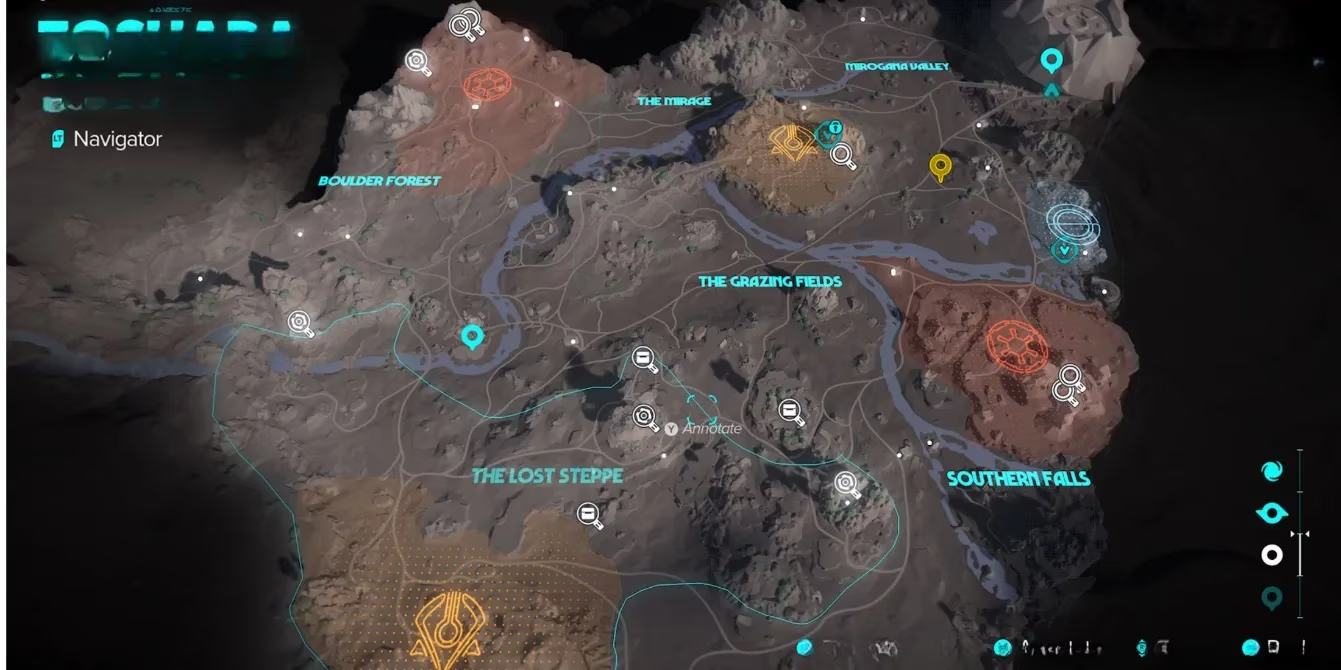
The most immediate shock when stepping into Star Wars Outlaws is what isn’t there. In previous Ubisoft epics, opening the map meant facing a mosaic of activity markers that could overwhelm even the most completionist player. Every side quest, collectible cache, and vendor screamed for attention, turning exploration into a giant to-do list. Outlaws swept all that noise away. Its map arrives as a nearly blank canvas, with only subtle icons appearing for things the player has organically stumbled upon — a rumor heard in a cantina, a strange signal traced to a forgotten outpost, or a friendly NPC who had a tip. This simple change hands the agency back to the player. One adventurer’s map might be dotted with Pyke crime hideouts after a string of daring heists; another’s could be threaded with Hutt business fronts and little else. The game doesn’t tell you what to discover. It waits for you to look, and that subtle shift makes every detour feel personal.
Freedom Without Barriers 🚀
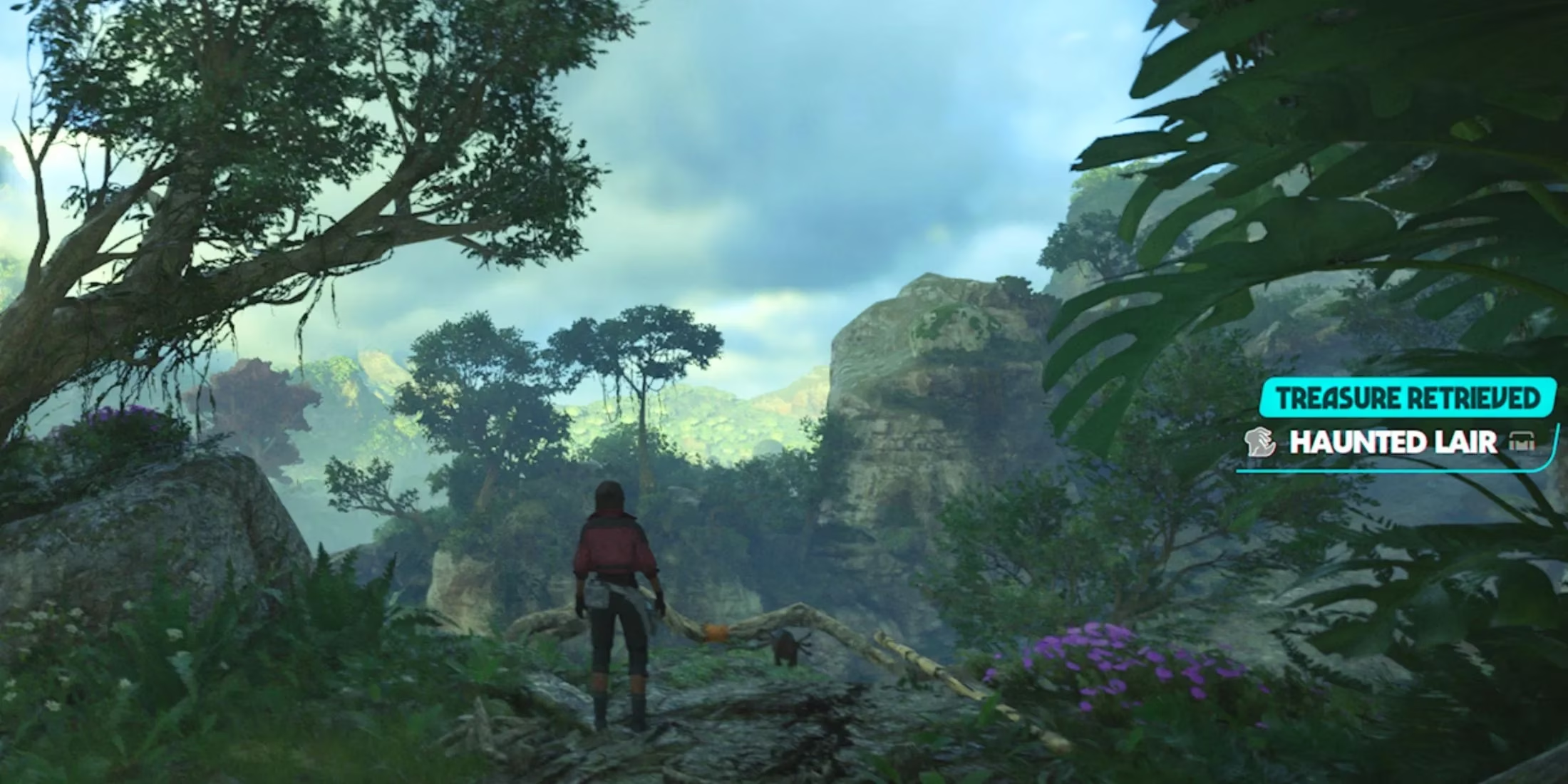
Kay Vess craves freedom from the Imperial yoke and the syndicates that hound her, and remarkably, players get to taste that freedom almost immediately. Gone are the gated worlds where major portions of the map remained locked behind a dozen main-story missions. As soon as space travel becomes available — which happens surprisingly early — the entire galaxy opens up. Planets like Toshara, Kijimi, and Tatooine aren’t roadblocks but invitations. Even more impressive is the absence of loading screens when moving from a planet’s surface into orbit and beyond. The transition is seamless, making the jump from ground to space feel like one continuous adventure. Fast travel lets players hop between planets instantly if they prefer, but the real magic lies in how the game never forces a destination. You can chart your own course, drifting through asteroid fields or diving into a nebula simply because it’s there.
From Speeder Bikes to Fast Travel: Making Exploration a Joy 🛵
Pulling all these open-world pieces together is Kay’s trusty speeder — affectionately called a ~~deathtrap~~ by its owner — which can be upgraded to glide across varied terrain with satisfying speed. The developers at Massive Entertainment clearly obsessed over creating environments that are both visually distinct and digestible in size. A trip from one end of Mirogana to the other never becomes a chore; instead, it’s a breezy ride where the landscape itself tells stories. Unlockable fast travel points add convenience, but they never replace the thrill of stumbling upon something unexpected while riding. This is where the game’s player-driven philosophy truly shines. Instead of spoonfeeding objectives, Star Wars Outlaws teases players with ‘?’ prompts or a distant voice beckoning from an alley. Eavesdropping on a conversation might reveal the location of a hidden credit stash, or overhearing a grumbling mechanic could lead to a new ship upgrade. It feels less like a system and more like living in a world. The Watch Dogs series experimented with a similar idea through private-call intrusions, but here the mechanic is less about advancing a predetermined plot and more about rewarding genuine curiosity. Exploration becomes its own story engine.
A Living Galaxy: Reputation and Consequences ⚖️
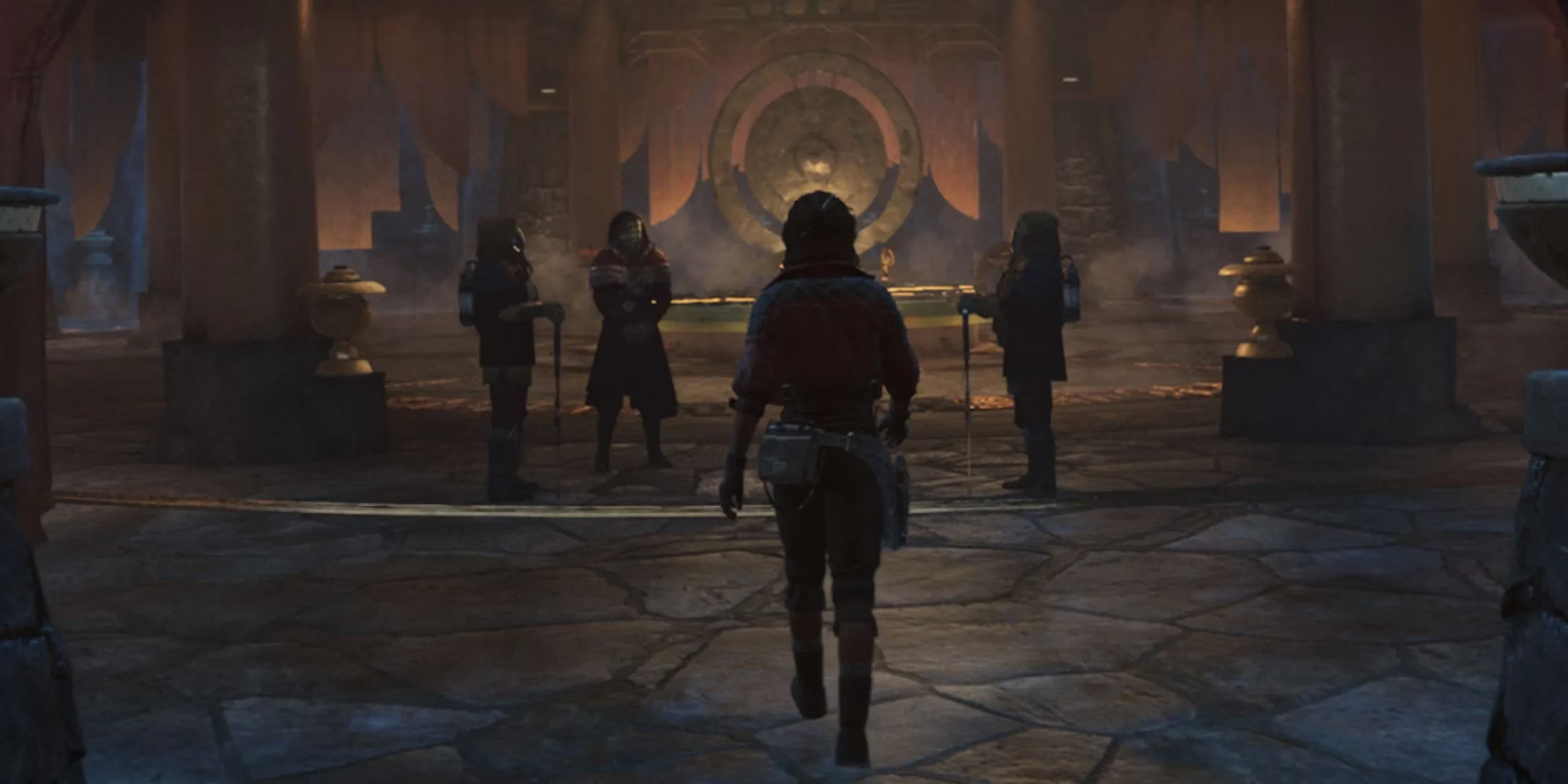
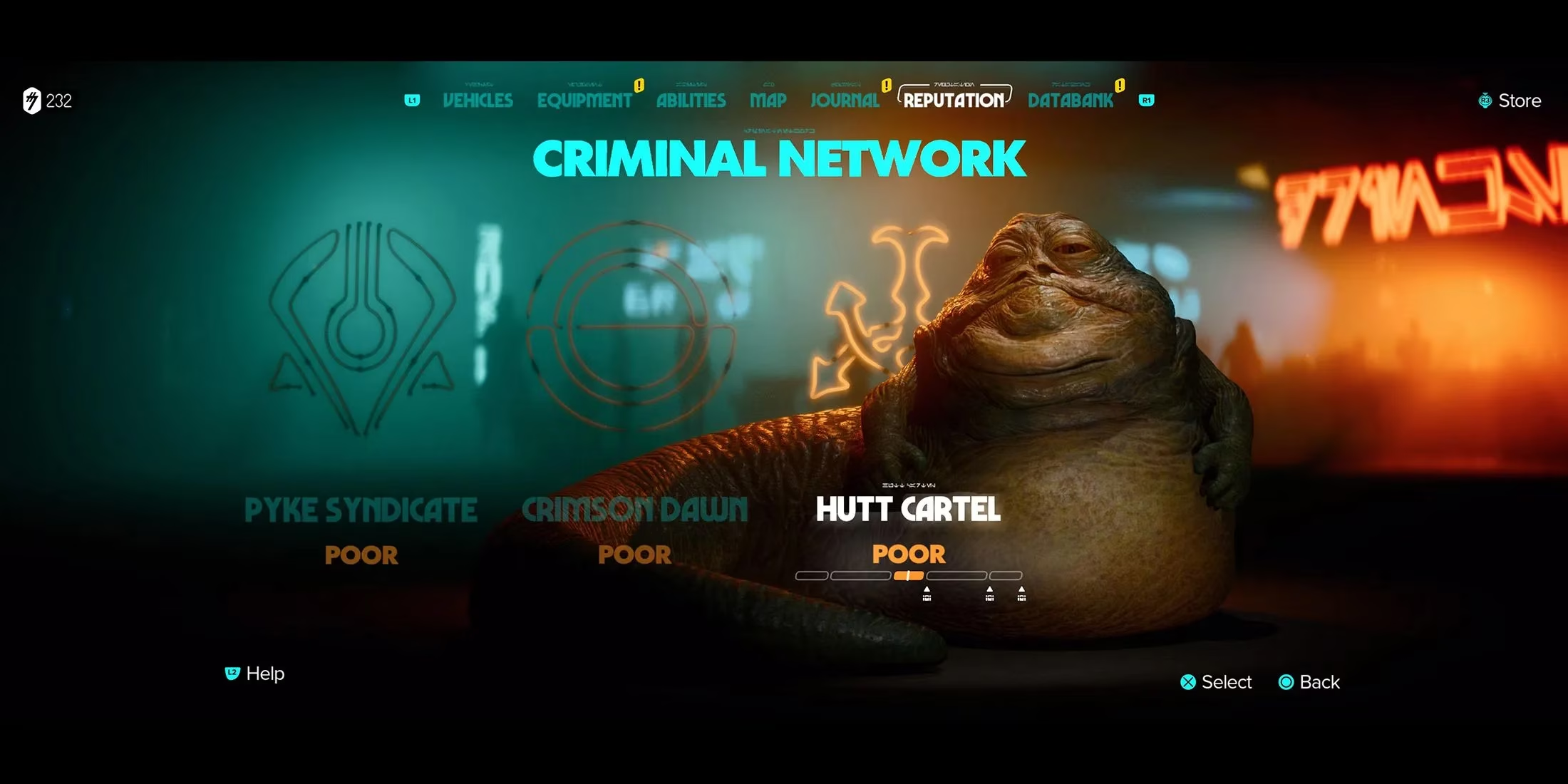
The ultimate reward for a curious rogue is a galaxy that remembers. At the heart of Star Wars Outlaws lies a dynamic reputation system that reacts to almost every choice Kay makes. Syndicate missions and moment-to-moment decisions shift her standing with groups like the Pykes, Crimson Dawn, and the Hutt Cartel. A high reputation isn’t just a number on a screen — it opens doors into territory that would otherwise be a fortress of blaster fire. Infiltrating a syndicate stronghold to retrieve a stolen artifact becomes a tense stealth dance rather than an all-out shootout. Conversely, a bad reputation turns a simple ride through a controlled sector into a high-speed chase or an ambush. Because every player builds a different web of alliances and grudges, no two playthroughs unfold alike. Where one scoundrel might stroll peacefully through a Pyke marketplace, another might have to scramble for cover the moment she’s recognized. This reactivity fills the open world with an unpredictability that had long been missing from the Ubisoft formula. It makes the galaxy feel less like a stage and more like a cockpit co-piloted by the player’s own history.
By stripping away the visual noise, removing artificial barriers, and trusting players to write their own tales, Star Wars Outlaws proved that less truly can be more. It didn’t abandon the bones that made Ubisoft open worlds so engrossing; it simply placed the explorer back in the pilot’s seat. In 2026, the ripple effects are still being felt in the genre, reminding developers that a map full of icons is just noise — and a map full of possibility is a symphony.