 AdvGamer
Death Stranding 2: On the Beach has one of those subtitles that sounds simple until it isn’t. When Sony’s State of Play broadcast revealed the full name, fans immediately split into two camps: those who recognized a location from Kojima’s strange post-apocalyptic universe, and those who caught the nod to Nevil Shute’s 1957 novel On the Beach. The answer, unsurprisingly, is both. The subtitle works as a dual reference—a place in the game and a classic end-of-the-world story—and that literary echo says a lot about the mood Kojima has been building since the first Death Stranding. By 2026, the sequel is no longer a future mystery. Death Stranding 2: On the Beach arrived on PS5 on June 26, 2025, and the conversation around its title has only grown more interesting.
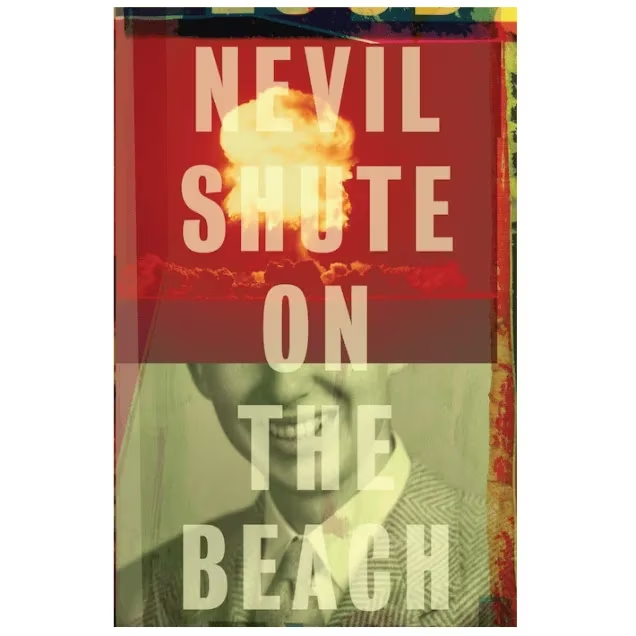
A Quiet Apocalypse in Australia
Shute’s novel is set in Australia after a global nuclear war has seemingly wiped out the rest of human civilization. The characters are not fighting a war or rebuilding a government. They are trying to live ordinary lives while waiting for the nuclear fallout to arrive and kill them. That premise is bleak, quiet, and deeply unsettling—not because of explosions or monsters, but because of the waiting. The book focuses on ordinary people, small routines, and the slow creep of inevitability.
It is not hard to see why Kojima would be drawn to that. Death Stranding is also a story about a spiritual apocalypse, isolation, and people trying to stay human in a world that has stopped making sense. The first game had a dour overall mood, but it also had moments of strange hope and connection. On the Beach carries a similar weight. It is less about the end itself and more about how people behave when the end is already on the horizon.
Why the Subtitle Works on Two Levels
The title On the Beach is not just a literary reference. It also points to a place in the game’s universe. That kind of double meaning is very Kojima: a subtitle that can be read as a location, a mood, and a cultural echo all at once. Fans who have followed his work know that he likes his titles to do more than one job. The reference is probably more about vibes than a plot blueprint. It signals tone, not a beat-for-beat roadmap.
| Element | On the Beach (novel) | Death Stranding 2: On the Beach |
|---|---|---|
| Setting | Australia after a global nuclear war | A fractured world haunted by extinction |
| Mood | Quiet dread and waiting | Melancholy, isolation, and weird hope |
| Kojima link | Thematic echo | Title and atmosphere |
| Direct adaptation? | No | No |
That distinction matters. Players should not expect the sequel to follow Shute’s story point by point. Kojima has never been shy about borrowing images, ideas, and moods from other art, but he usually remixes them into something of his own. The subtitle is a signal that Death Stranding 2 will carry a similar sense of looming catastrophe. It is not a promise that the game will end with the same quiet despair as the novel.
A Short Classic With a Stacked Film Version
Published in 1957, On the Beach is the kind of literary classic that is easy to recommend. The premise is compelling, the characters are interesting, and the length is short enough that a reader can finish the whole thing in an afternoon. That makes it a much less time-consuming experience than Death Stranding 2, which is a massive game with long walks, long cutscenes, and long conversations about connection and extinction.
There is also a 1957 film version of On the Beach starring Gregory Peck, Ava Gardner, and Fred Astaire. That is a stacked cast by any standard. The film has become somewhat hard to find in the United States, but imported Korean DVD releases with English audio have circulated among collectors. For players who prefer screen versions of things, it is an interesting companion piece—especially because the black-and-white seriousness of the film fits the novel’s quiet dread.
The Vibes Are the Point
In 2026, with Death Stranding 2 already out in the world, the subtitle reads less like a tease and more like a statement of intent. The game is still a Kojima production: strange, emotional, uneven, and full of ideas. The novel On the Beach is not required reading for understanding the plot, but it does offer a useful window into the game’s headspace. Both stories imagine people carrying on after the world has already ended in some fundamental way. Both are interested in routine, grief, and the stubborn human habit of hoping anyway.
So fans should not overread the reference. It is probably not a hidden code for the ending. It is a mood board, a literary wink, and a clue that Death Stranding 2 wants to sit with the same uncomfortable question the novel asks: what does ordinary life look like when the future has already been cancelled? That is a heavy question for a video game, but Kojima has never been afraid of heavy questions. The subtitle is just one more sign that he wants players to feel the weight of the beach before they ever reach it. 😌📚🎮
The analysis is based on VentureBeat GamesBeat, whose reporting on game industry trends helps frame why a subtitle like On the Beach matters beyond simple branding: it positions Death Stranding 2 within a broader conversation about prestige storytelling, cross-media influence, and the commercial value of distinct auteur identity in modern AAA releases.