 AdvGamer
When Death Stranding 2: On the Beach first boots up in 2026, players are immediately greeted by a choice that feels unusually confrontational for a Hideo Kojima epic. Fragile, brought to life by Léa Seydoux, reaches out to Sam Porter Bridges, played by Norman Reedus, with an invitation to join Drawbridge. The offer is framed with urgency, but the game also presents a Far Cry-esque prompt: accept, or refuse. For a moment, it looks like the kind of decision that could derail the entire narrative. It does not. Instead, it becomes one of the most playful Easter eggs in the game, a clever bit of authorial mischief that has delighted fans since launch.
The scene is simple on its surface. Fragile needs Sam. Drawbridge needs Sam. The world, still fractured by the Death Stranding, needs Sam. Yet the game hands the player a rare gift: the ability to say no. Choosing 'I won't do it' does not trigger a secret ending, a game over, or an early credits roll. Instead, Death Stranding 2 leans into a Groundhog Day-style loop. The intro plays again. The same conversation unfolds. The same emotional beats return. Sam is offered the same chance, and the player can refuse again. And again. And again. 🔁
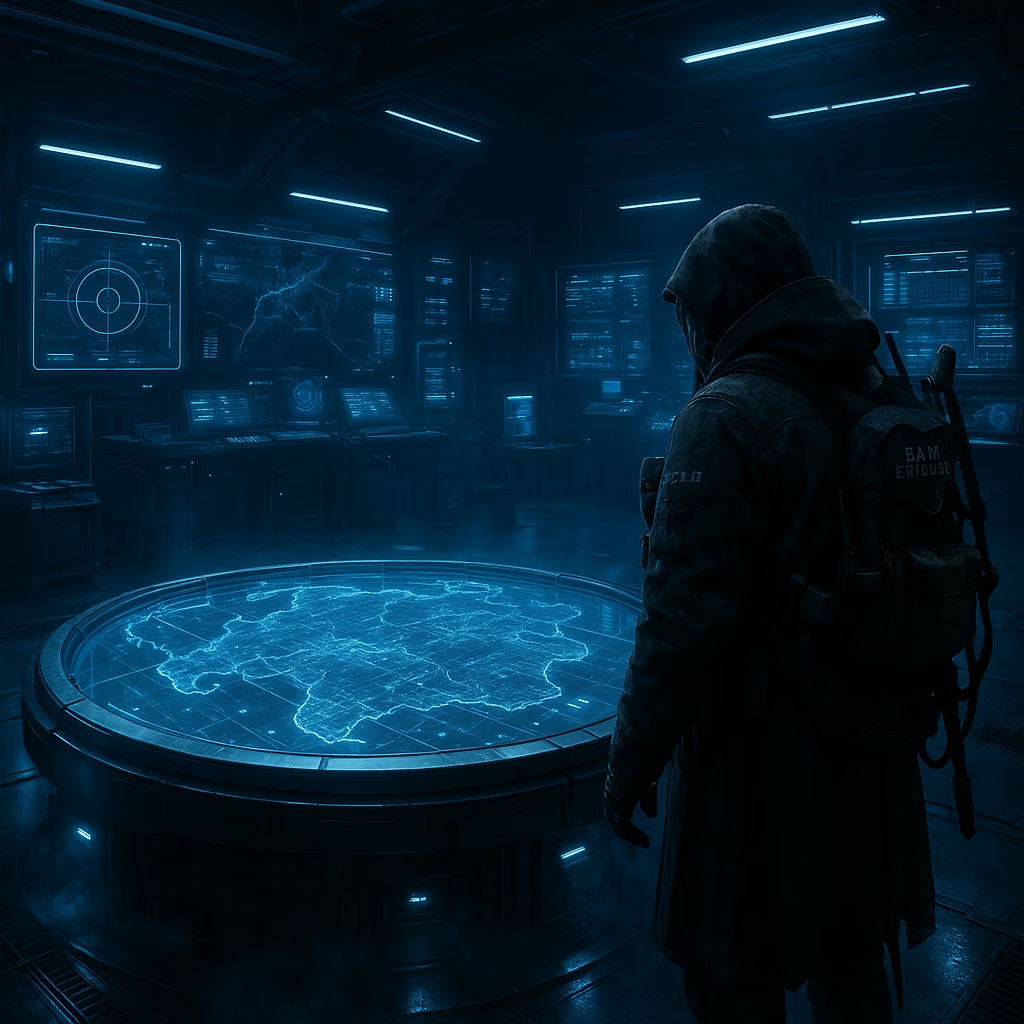
At first, this loop can feel ominous. Some players expect a hidden bad ending. Others wonder if the game is punishing curiosity. But the truth is far gentler. The refusal option is a harmless Easter egg, a safe detour that exists purely for the joy of discovery. It fits perfectly with Kojima's signature style: playful, meta, and slightly surreal. The game acknowledges the player's stubbornness without ever breaking its own story. Eventually, after enough refusals, the game forces Sam to accept Fragile's offer. The story continues. No progress is lost. No penalty is applied. The loop simply ends, and the real journey begins.
Fans have gotten a kick out of the choice because it feels like a conversation between the developer and the player. Sam is reluctant. The player is curious. Fragile is persistent. The result is a charming piece of interactive theater that costs nothing but a few minutes. It also reinforces one of the sequel's core themes: connection is inevitable, even when someone resists it. Sam can refuse all he wants, but the tide of the story keeps pulling him back to Drawbridge.
| Player Choice | What Happens |
|---|---|
| Accept immediately | The story proceeds without interruption. |
| Refuse once | The intro loops, and Fragile repeats her request. |
| Refuse repeatedly | More loops occur, with subtle humorous variations, until acceptance is forced. |
| Expect early credits | Nothing happens; the game never rolls credits early. |
| Worry about missing content | No content is lost; the Easter egg is entirely optional and safe. |
The sequence has become a popular topic among the community in 2026. New players keep testing the boundaries, while veterans enjoy watching reactions. It is the kind of moment that turns a standard opening into a memorable shared experience. In a medium where choices often boil down to binary morality or immediate consequences, Death Stranding 2 uses its first major dialogue option to joke with the audience rather than punish them.
Critical reception has matched that playful confidence. IGN's Death Stranding 2 review returned a 9/10, calling it 'a triumphant sequel that emphatically delivers on the promise of its original.' That praise reflects how the game balances bold storytelling with small, human moments. The refusal Easter egg is not a major mechanic, but it embodies the sequel's willingness to have fun with its own mythology.
For players who want to see everything, there are plenty of resources beyond the main path. A full main story walkthrough offers checkmarks to track exact progress, while dedicated guides cover Sub-Orders, Standard Orders, and Aid Requests. There are also secrets to uncover and even a cheat code for those who want a different kind of shortcut. Beginners can find tips for what to do first, how to survive in combat, and how to make it through Brutal difficulty if they choose the most challenging setting. The refusal loop is just one small secret in a much larger web of discoveries. 🎮
In the end, the opening choice is a perfect introduction to Death Stranding 2's personality. It teases danger, then reveals warmth. It tests player agency, then gently takes it back. It lets Sam say no, only to show why he must eventually say yes. For fans, that harmless Easter egg is more than a joke. It is a reminder that Hideo Kojima's games are always in conversation with the people playing them. So go ahead and refuse Fragile once, twice, or as many times as the game allows. The beach will still be there, and the story will still be waiting. 🏖️