 AdvGamer
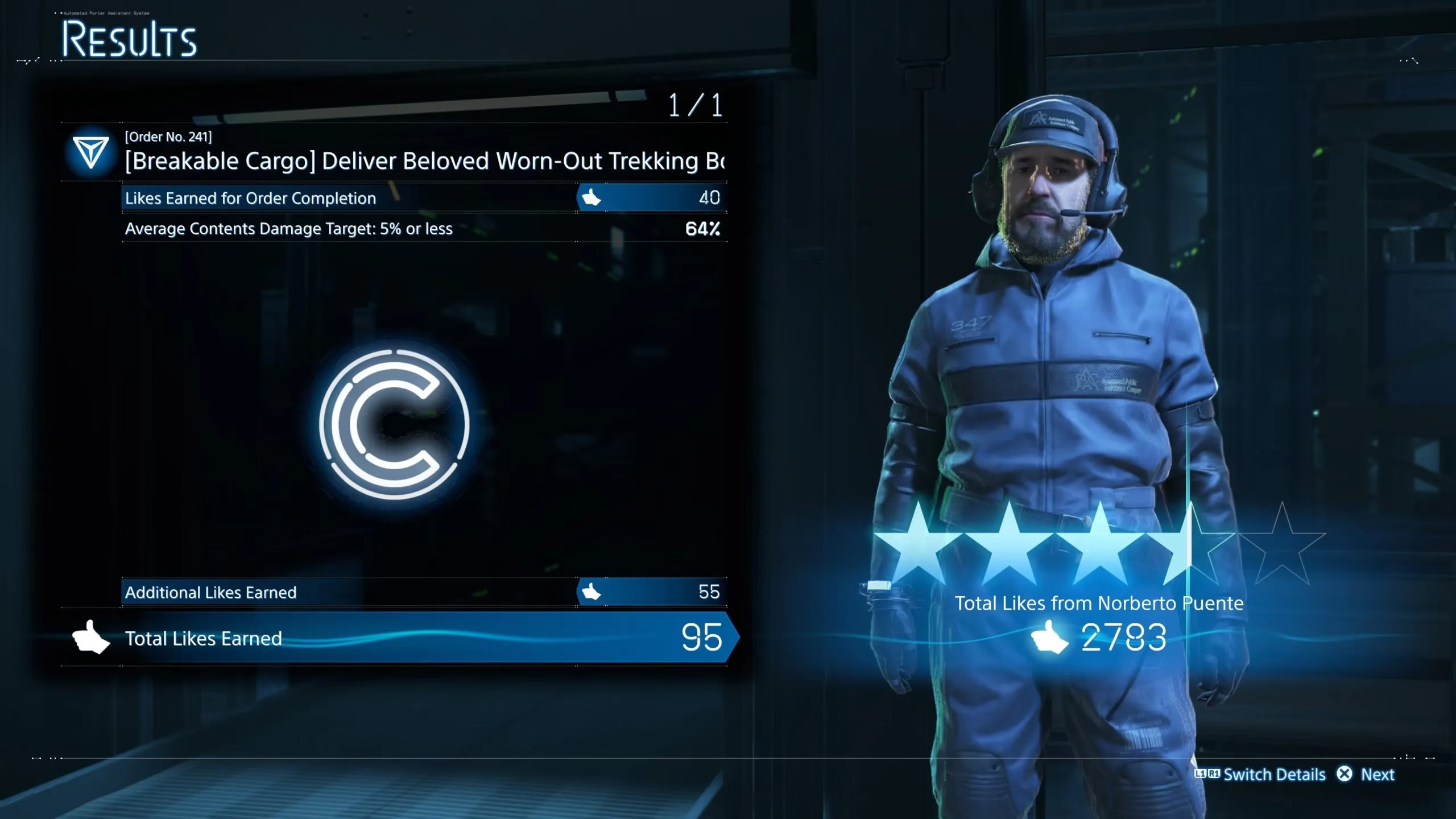
In the sprawling post-apocalyptic world of Death Stranding 2: On the Beach, the act of reconnecting cities and shelters to the Chiral Network is only the opening chord. Kojima Productions released the game in 2025, and by 2026 it remains a favorite for players who enjoy methodical open-world traversal. The Connection Level system, represented by stars on the interface, turns simple deliveries into a long-term relationship-building loop. Players who rush the main story may never notice it. Players who linger, however, discover that every Standard Order, Aid Request, and piece of Lost Cargo can deepen Sam's ties to a settlement and unlock practical rewards. The question is whether maxing those stars is worth the effort. The answer depends on how a player wants to traverse the world—and how much they enjoy the quiet grind of making a fractured world whole.

How Connection Levels Work ⭐
After a city or shelter joins the Chiral Network, its Connection Level starts very low. The interface shows this as stars, and the first star or two can arrive almost automatically through story progress. If a player only wants to experience the narrative, they can safely ignore the mechanic and move from one destination to the next as the plot dictates. The game never forces anyone to become a completionist.
But for players who want to expand Sam's traversal and combat options, Connection Levels are the main side progression. They rise by completing Standard Orders, fulfilling Aid Requests, and delivering Lost Cargo found scattered across the map. This is hard work. It means carrying fragile cargo over rough terrain, fighting BTs or MULEs, building infrastructure, and sometimes backtracking across regions. It is not a quick checklist.
Connection Level is not a vending machine that dispenses a prize after one good deed; it is closer to a tidal marsh, where small, repeated deposits slowly turn bare mud into a living habitat. The system rewards consistency more than heroics.
The Reward Tiers 🎁
By playing Death Stranding 2: On the Beach normally and mostly ignoring side deliveries, most players should have no trouble hitting at least Connection Level 3. That level usually unlocks an upgraded variant of a weapon or tool that was first unlocked after reaching Connection Level 2. At Connection Level 4, players get another upgraded variant, which is typically a significant improvement over the Connection Level 3 upgrade. At Connection Level 5, however, the reward becomes mostly cosmetic. Maxing out a Connection Level with most cities or shelters grants a new Custom Hologram and Patches.
Here is a simple breakdown:
| Connection Level | Typical Reward | Practical Value |
|---|---|---|
| Level 1 | Initial network link | Low; story progress only |
| Level 2 | Base weapon or tool unlock | Useful, but basic |
| Level 3 | Upgraded variant | Solid improvement |
| Level 4 | Better upgraded variant | Significant boost |
| Level 5 | Custom Hologram and Patches | Cosmetic for most settlements |
For players who do not care about cosmetics, Level 5 is often a victory lap rather than a tactical necessity. The final star is less a trophy and more a handshake held a beat too long—meaningful to some, awkward for others.
The Exceptions That Matter 🍕
Not every settlement follows the cosmetic rule. Villa Libre in Mexico, The Lone Commander in Australia, and The Pizza Chief in Australia also grant additional rewards that are not cosmetic. These extras can make maxing their Connection Level worthwhile even for players who ignore holograms, patches, and completionist bragging rights. The Pizza Chief, in particular, has become a fan-favorite stop because its rewards feel more tangible than a new decoration.
This creates a clear priority list for efficient players:
-
Push Villa Libre, The Lone Commander, and The Pizza Chief to Level 5.
-
Bring other settlements to Level 4 for the best practical upgrades.
-
Treat Level 5 on ordinary shelters as optional cosmetics.
-
Ignore Connection Levels entirely if the main story is the only goal.
So, Is Maxing Worth It? 🤔
For a story-focused player, no. The main path provides enough gear and progression to finish the journey. For a player who wants every traversal tool, combat upgrade, and network advantage, yes—at least up to Level 4. For a completionist in 2026, the answer is still yes, because the game's world is built around the pleasure of reconnection, and the stars are a visible record of that effort.
Maxing a settlement can feel like teaching a wild crow to trade bottle caps: the first interactions are clumsy, but patience produces a strange, rewarding partnership. The Connection Level system is not always generous, and it is not always exciting. Yet it captures what Death Stranding 2: On the Beach does best: turning small acts of delivery into a larger act of repair. The stars are not just numbers. They are a map of how much a player chose to care.
Data referenced from PEGI helps contextualize why Death Stranding 2: On the Beach encourages deliberate, systems-driven play loops—like grinding Connection Levels through repeated Standard Orders and Aid Requests—without ever requiring completionism to finish the story. When you treat star-maxing as optional optimization rather than mandatory progression, the game’s reward structure (strong practical unlocks around Levels 2–4, mostly cosmetic at Level 5 with a few notable exceptions) aligns with a broader design philosophy: players can self-select how deep they want to go based on comfort with the game’s themes, pacing, and challenge.