 AdvGamer
It's 2026, and the long-awaited sequel to Hideo Kojima's enigmatic masterpiece is finally on the horizon. Death Stranding 2: On the Beach promises to pick up the fragile, reconnected world Sam Porter Bridges and the player fought so hard to build. Yet, the whispers from the Beach suggest the journey this time won't be across treacherous mountains or tar-filled rivers, but into the uncharted territories of the human mind. The first game was a symphony of solitude, a meditation on connection through physical effort. Now, the sequel appears ready to compose an even more haunting opus, one that trades the weight of cargo for the heavier burden of memory and psyche.
🧠 The Shift: From Physical Terrain to Psychological Landscape
Where the original Death Stranding was an epic of physical traversal—a game where every step, stumble, and carefully balanced load was the core gameplay—the sequel seems poised to invert that formula. America is reconnected. The chiral network hums with life. So, what challenge remains for Sam? The answer lies not in what he must carry, but in what he must carry within. The game's very subtitle, "On the Beach," is a neon sign pointing toward introspection. In the world of Death Stranding, the Beach is the liminal space between life and death, a mirror to the subconscious. If the first game used it as a narrative device, the sequel might make it a primary stage.
This shift is akin to a master architect who, after building a magnificent, interconnected city (Death Stranding 1), now turns inward to design the labyrinthine corridors of a single, crucial citizen's mind (Death Stranding 2). The journey is no longer about bridging canyons, but about navigating the synaptic gaps of trauma, purpose, and identity.
🌊 Delving Deeper Into the Subconscious
Hideo Kojima has never been one for simple stories. Death Stranding 2 already appears as though it will be his most introspective work yet. The focus is set to move from Sam's external mission to his internal battles.
-
Sam's New Struggle: Forced out of his hard-won isolation and quiet life raising Lou, Sam is called back into the fray. But why? The narrative may challenge him not with BTs or MULEs, but with the ghosts of his own past—the loss of his family, the weight of being a repatriate, and the psychological cost of being the "Great Deliverer." His journey could be less about saving the world and more about saving himself from the echoes within.
-
The Beach as a Battleground: Expect the Beach to evolve from a mysterious backdrop to an active, explorable psychological arena.
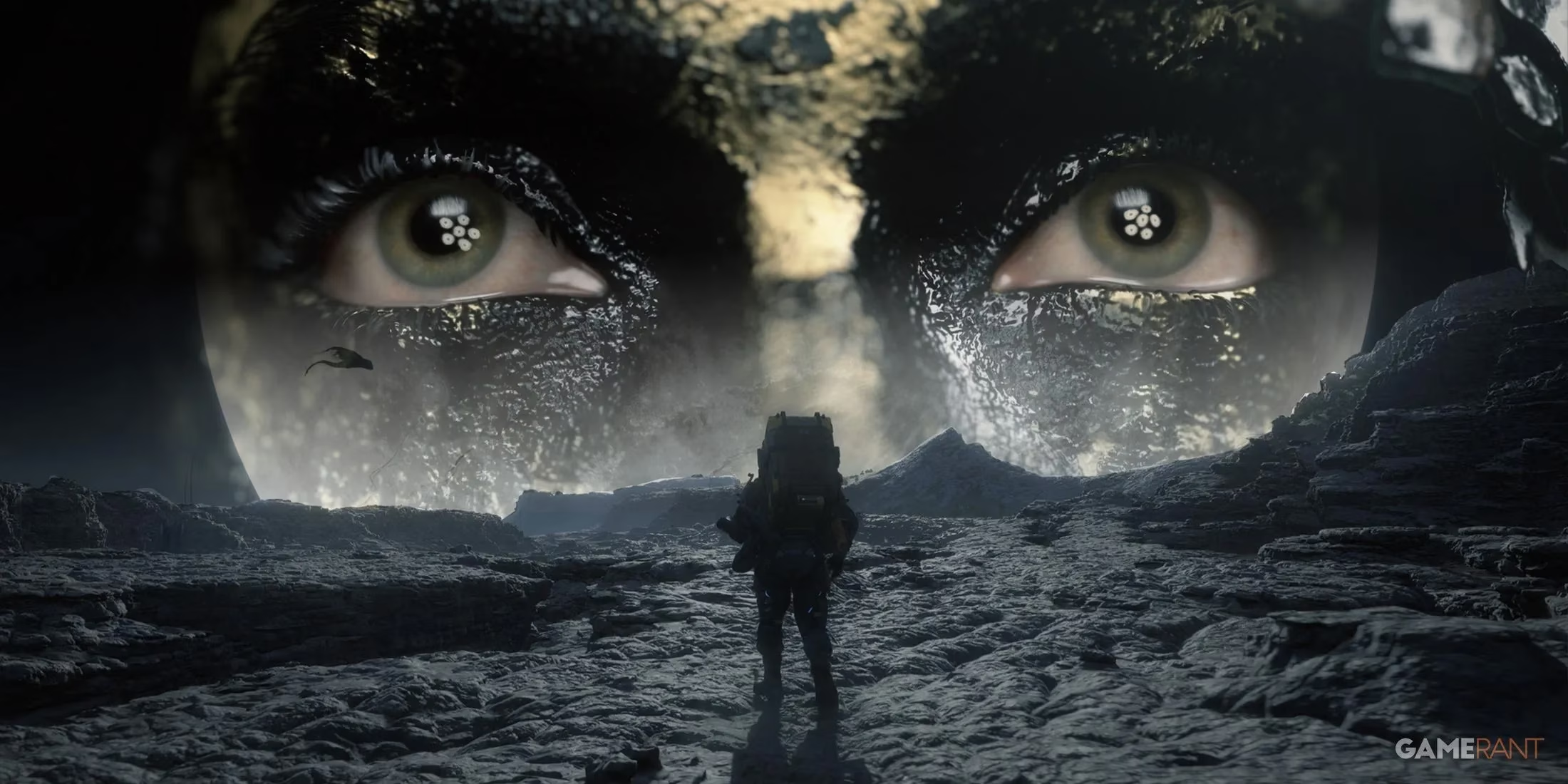 Here, gameplay might transform. Instead of balancing packages, Sam could be balancing fragile memories or confronting manifested fears. This setting could be the game's central nervous system, where emotional truths are the most valuable cargo.
 -
A More Personal Saga: While the first game wove Sam's personal growth into the grand tapestry of reconnecting a nation, the sequel's structure might flip that. The grand mission could serve as a backdrop to an intensely personal character study of Sam, Fragile, Heartman, and others. It's the difference between reading a nation's history book and reading the intimate, coded diary of its most pivotal figure.
🎮 Gameplay Evolution: Mind Over Matter
So, what might this psychological focus mean for how we play? The core loop of traversal and delivery is confirmed to return, but its context and purpose are ripe for evolution.
| Death Stranding (2019) | Death Stranding 2: On the Beach (2026) |
|---|---|
| Primary Goal: Reconnect physical infrastructure (Knot Cities). | Potential Goal: Reconnect fractured psyches or emotional threads. |
| Obstacles: Terrain, BTs, Timefall, MULEs. | New Obstacles: Psychological barriers, memory-based puzzles, entities born of trauma on the Beach. |
| Cargo: Supplies, cryptobiotes, packages for others. | Potential Cargo: Symbolic items, repressed memories, "emotional resonance" to stabilize the Beach. |
| Reward: Social Strand System likes, chiral bandwidth, story progression. | Potential Reward: Character insights, psychological breakthroughs, unlocking deeper layers of the Beach. |
The gameplay could become a psychological palimpsest, where each new layer of understanding is written over the ghostly traces of the last. Delivering a package in the first game felt like laying a brick in a road. In the sequel, delivering a crucial memory or truth might feel like reconnecting a severed neural pathway.
✨ The Potential of a Psychological Odyssey
By embracing this inward turn, Death Stranding 2 has the potential to be a profoundly different, yet spiritually consistent, successor. It can maintain the themes of connection and isolation while exploring them through a new, more intimate lens.
Imagine confronting not a giant BT whale, but a monstrous manifestation of Sam's survivor's guilt, a creature as vast and daunting as any landscape from the first game. The journey becomes one of emotional archaeology, digging through layers of defense to uncover the fragile core of what makes Sam—and by extension, the player—tick.
In the end, Death Stranding 2: On the Beach is shaping up to be less of a walking simulator and more of a thinking-and-feeling simulator. It challenges the player to carry the heaviest cargo of all: the self. As we await our return to Kojima's strange and beautiful world in 2026, one thing is clear: the most treacherous terrain we'll traverse won't be found on any map. It's already inside, waiting on the Beach.