 AdvGamer
I've been a gamer long enough to know that when a developer starts talking about a game's revolutionary features before it's even gold, it's time to lower the hype shields. Back in the day, I fell for the sweetest lies you can imagine—dynamic everything, life-changing mechanics, and features so deep they'd redefine the genre. Then the game launches, and suddenly I'm staring at a half-baked world, wondering where my promised werewolf-transformation, wall-running parkour, and digital children went. Let's talk about two of gaming's most infamous overpromisers—Fable and Cyberpunk 2077—and why, in 2026, their stories still matter more than ever.
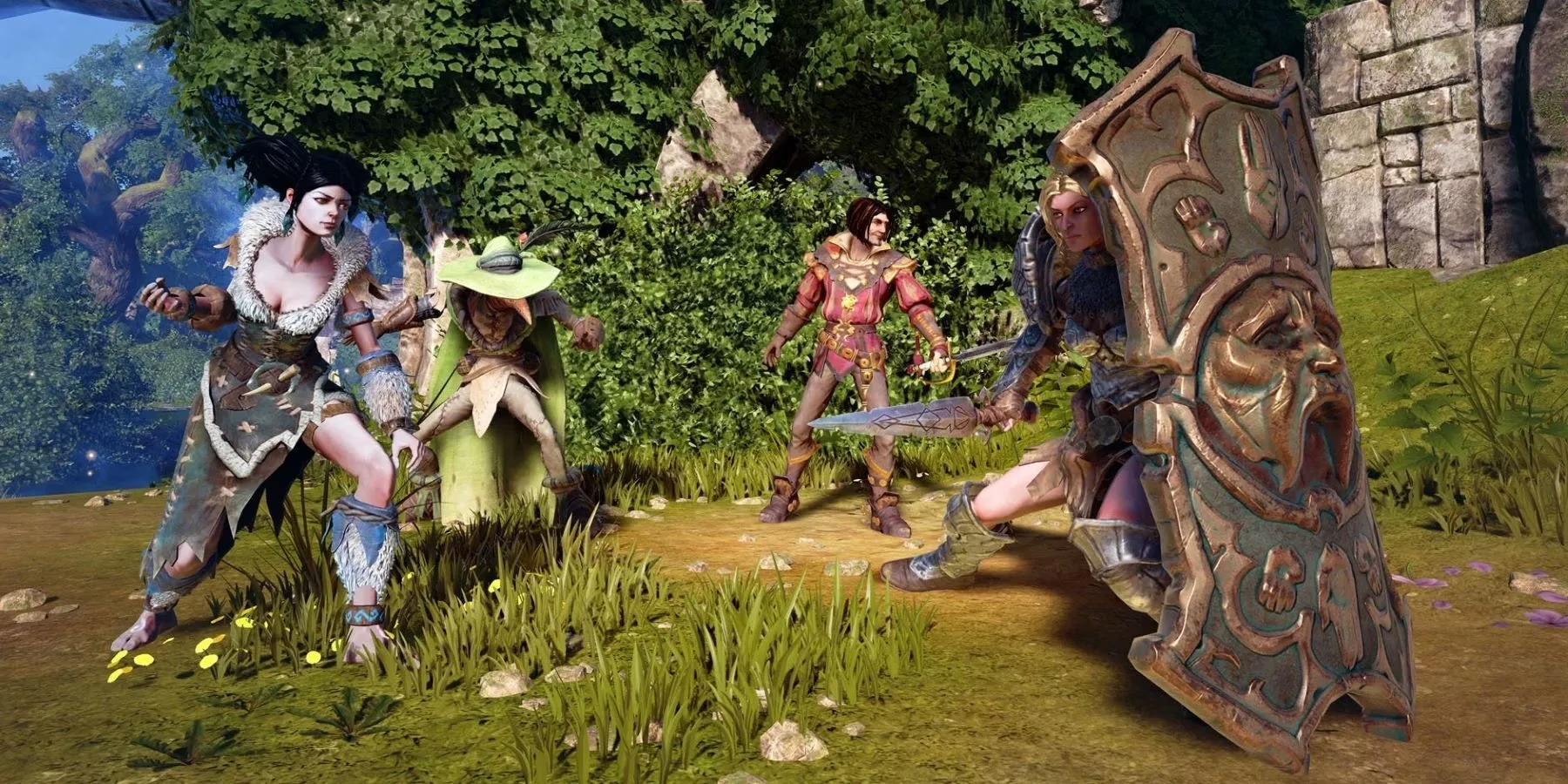
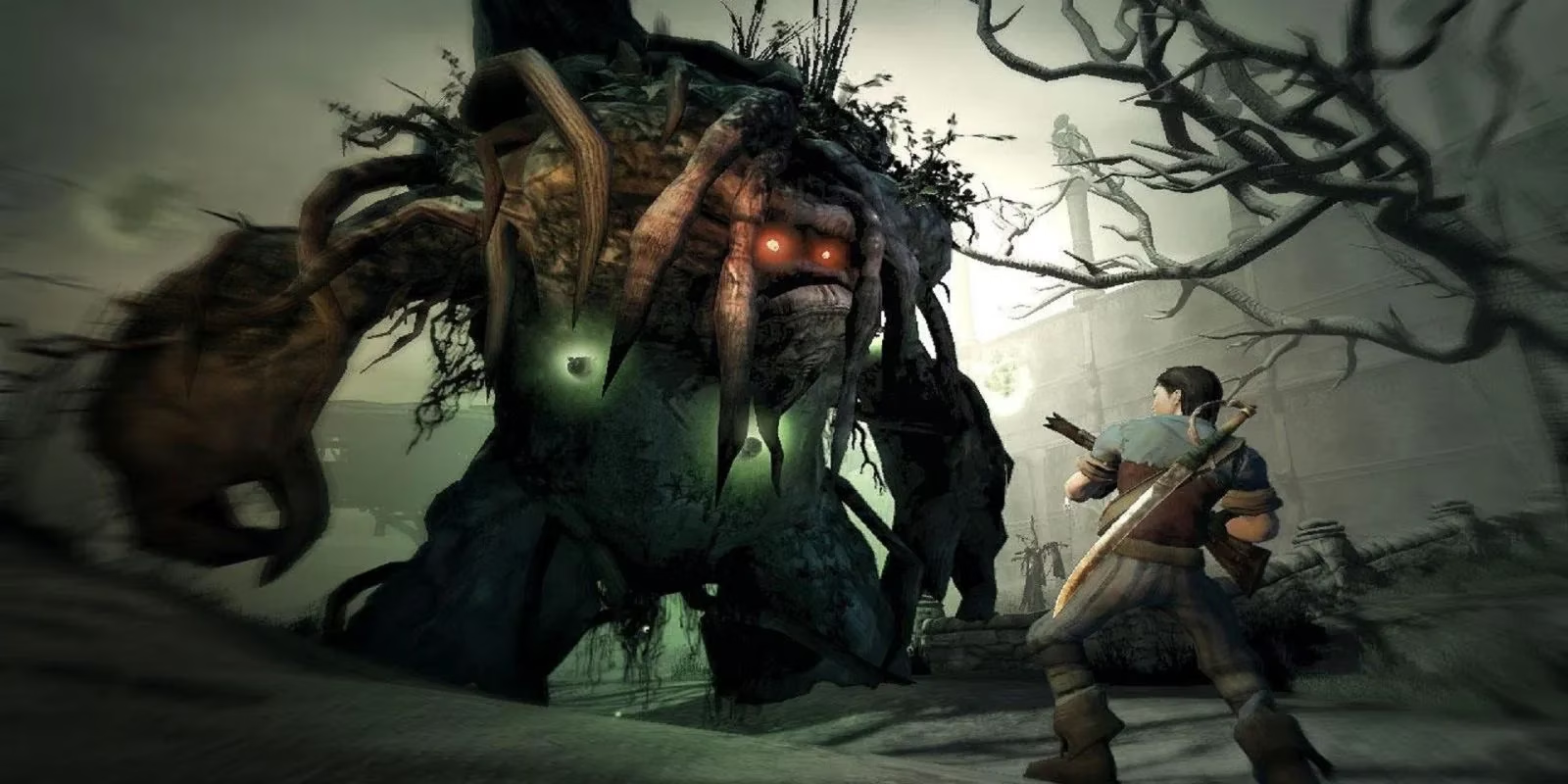
Remember the original Fable? Peter Molyneux, the co-founder of Lionhead Studios, could sell ice to a Frost Troll. He promised us a combat system so dynamic we'd be swinging from chandeliers and using every rusty barrel as a weapon. Instead, we got a solid but fairly standard hack-and-slash affair. He hinted that getting bitten by a balverine would turn us into one, offering a hidden werebeast life path. That feature? Vaporware. And don't get me started on children. Molyneux proclaimed they'd be a pivotal part of our hero's legacy. Yet my character's entire lineage consisted of a couple of off-screen mentions and a very lonely marital bed.
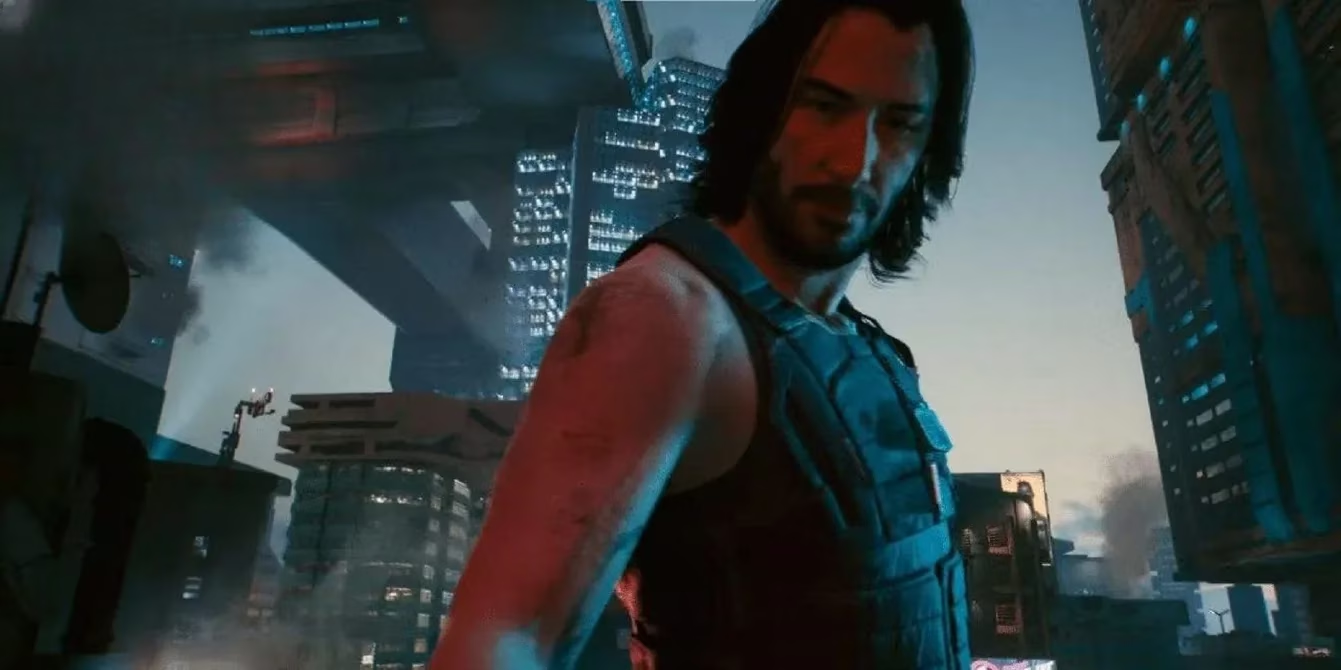
Fast-forward a couple of decades, and Cyberpunk 2077 pulled a similar trick. CD Projekt Red showcased jaw-dropping vertical movement with wall-running, making Night City seem like a free-runner's paradise. Then, just months before launch, they quietly axed it. Character customization took a hit too—those deep backstory choices that were supposed to ripple through every conversation? Truncated. And the ability to edit my V's neon-drenched haircut after the intro? Gone. For a game built on style and identity, it felt like being handed a perfectly tailored jacket that you're never allowed to take off, seams and all.
Now, putting my own salt aside, let's look at what actually happened once both games shipped:
| Feature | Fable (2004) | Cyberpunk 2077 (2020) |
|---|---|---|
| Dynamic environment combat | Teased, nearly absent in final game | Basic cover and hacking, no wall-running |
| Monster transformation | Promised balverine curse | No equivalent promised |
| Offspring mechanics | Hyped, then dropped | N/A (no life path progeny) |
| Post-start appearance editing | Not an issue at the time | Missing until a later patch |
| Buggy launch state | Relatively polished | Infamously broken, especially on last-gen |
| Recovery of reputation | Critical darling, beloved trilogy | Recovered over years with patches & Edgerunners anime |
Despite its missing features, Fable emerged as a charming and highly influential RPG trilogy. The core loop—questing, buying property, farting on villagers—was distinct enough that we forgave Albion's broken promises. Cyberpunk 2077, however, stumbled out of the gate with a faceplant heard across the industry. Before the Phantom Liberty expansion in 2023 and a laundry list of patches, it wasn't just missing promises—it was a techno-nightmare of T-posing NPCs and crashes. The double whammy of cut content plus disastrous performance meant CDPR had to spend years rebuilding trust.
And here we are in 2026, watching the next generation of Albion unfold. Playground Games' Fable reboot finally launched last year, and because they watched their predecessors closely, it's a remarkable case study in restraint. Pre-release marketing showed exactly what the game could do—gorgeous landscapes, seamless magic, and a genuinely reactive world—without teasing werewolf evolutions or 1,000-hero multiplayer battles. The result? A stable, critically acclaimed RPG that feels like a love letter to the series and a middle finger to overhype culture. It's not utterly revolutionary, but it delivers on every single promise with polish. And honestly? That's refreshing.
If I can offer one piece of advice to any developer eyeing a flashy trailer in 2026: don't set your garden on fire with fireworks you haven't built yet. Fable taught us that a game can survive missing dreams if the core is strong, while Cyberpunk 2077 showed us that too many broken promises, layered over technical chaos, buries even the meatiest vision. Playground Games took the hint—they watered the garden, grew what they showed, and let players taste the fruit without any lingering bitterness of what could have been. So here's to marketing that respects players, and to the balverines we never got to be. Maybe in the next DLC.